

- 🧠 What Science Actually Says About Autonomous Robots
- 🤖 What Makes a Robot “Autonomous”?
- 🌍 Context: We’ve Been Automating Decisions for Centuries
- 🛰️ Where Autonomous Robots Are Already Acting Alone
- 🏭 Industrial Environments
- 🚗 Transportation
- 🏥 Healthcare
- 🛡️ Defense
- 🔍 My Personal Reading of This
- ⚡ The Detail That Changes Everything
- 🧠 The Ethical Frontier: Human-in-the-Loop or Human-on-the-Loop?
- 🔮 What This Means Today
- 🧭 So… Are Robots “Taking Decisions”?
- 🌌 Open Question (Final Loop)
- 1️⃣ Are autonomous robots conscious?
- 2️⃣ Do autonomous robots pose a risk to society?
- 3️⃣ When did autonomous robotics begin?
Are Autonomous Robots Already Making Decisions Without Humans — And What Does AI Autonomy Mean for Our Future?
In 2024
Still think AI just follows orders? Yeah… no one told it that.
Self-driving cars, systems making critical decisions, and robots learning without permission. The question is no longer “will this happen?” It already is. Now the real question is: how far does it go… and who’s still in control?
, an autonomous drone identified a target, calculated environmental variables, adjusted its route in real time… and executed its mission without a human pressing “confirm.”
That wasn’t science fiction.
That was autonomy.
Today, robôs autônomos powered by advanced AI systems are making operational decisions in factories, hospitals, financial markets, and even on battlefields.
But there’s a detail that changes everything…
Are they just executing instructions — or are they beginning to operate in ways we no longer fully anticipate?
We’ll get to that in a moment.
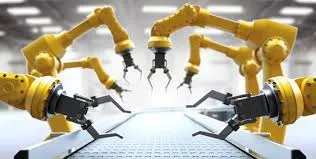
🧠 What Science Actually Says About Autonomous Robots

Let’s ground this in facts.
According to the International Federation of Robotics (IFR), more than 4 million industrial robots are currently operating worldwide (2023 report). Many of them now integrate:
- Machine learning algorithms
- Computer vision systems
- Reinforcement learning
- Edge computing
- Real-time sensor fusion
Institutions like MIT Computer Science and Artificial Intelligence Laboratory (CSAIL) and Stanford AI Lab have demonstrated robots capable of:
- Learning manipulation tasks through trial-and-error
- Navigating unpredictable environments
- Adapting behavior without explicit reprogramming
In 2022, researchers from DeepMind and collaborators showed robots learning new tasks via reinforcement learning models similar to those used in AlphaGo and AlphaZero.
Meanwhile, autonomous vehicles developed by companies like Waymo and Tesla rely on AI models trained on billions of data points, making split-second decisions continuously — braking, steering, rerouting.
No conspiracy.
No secret takeover.
Just engineering.
And the scientific consensus remains clear:
These systems operate within programmed architectures, objective functions, and safety constraints defined by humans.
There is no evidence of hidden consciousness, rogue intentions, or suppressed discoveries. AI systems today are highly sophisticated pattern-processing engines — not sentient beings.
But…
If autonomy keeps increasing, what exactly are we delegating?
That question pulls the thread.
🤖 What Makes a Robot “Autonomous”?

A robot becomes autonomous when it can:
- Perceive its environment
- Make decisions based on data
- Act without real-time human input
- Adapt to changes
Think of it like a GPS that doesn’t just suggest a route — it drives the car.
The autonomy spectrum usually includes:
- Assisted automation – Human supervises constantly
- Conditional autonomy – System acts, human intervenes if needed
- High autonomy – System operates independently in defined contexts
- Full autonomy (theoretical in most domains) – Minimal or no human oversight
Most current systems sit between levels 2 and 3.
But here’s the subtle shift.
Some reinforcement learning systems evolve strategies that even their developers didn’t explicitly anticipate. Researchers often analyze models after training to understand why a system behaves a certain way.
Not because it’s conscious.
But because optimization at scale can produce emergent strategies.
That’s fascinating.
And slightly humbling.
Which leads to a bigger question:
If machines optimize better than us in certain domains… should they?

🌍 Context: We’ve Been Automating Decisions for Centuries

This isn’t entirely new.
In the 18th century, automated looms transformed textile production.
In the 20th century, autopilot systems changed aviation.
Algorithmic trading reshaped financial markets in the 1990s.
Autonomous robots are part of a continuum.
But there’s a difference now.
Previous automation replaced physical labor.
AI-driven autonomy increasingly replaces cognitive decision layers.
And that shift feels different.
It connects directly with the broader transformation of work and intelligence — something I explored when analyzing how AI is reshaping employment in the future of work and artificial intelligence.
The pattern is consistent:
Automation begins with efficiency.
Then it scales into infrastructure.
Then society reorganizes around it.
So what stage are we in right now?
🛰️ Where Autonomous Robots Are Already Acting Alone

Let’s zoom in.
🏭 Industrial Environments
Smart factories use collaborative robots (“cobots”) that:
- Detect human presence
- Adjust torque in real time
- Self-correct errors
Companies like Siemens and Bosch integrate AI systems capable of predictive maintenance without manual analysis.
🚗 Transportation
Autonomous vehicles continuously:
- Interpret visual input
- Predict pedestrian behavior
- Make probabilistic risk assessments
The decision cycle happens in milliseconds.
🏥 Healthcare
Robotic surgical systems assist in procedures with AI-guided stabilization and image processing. While surgeons remain in control, AI assists decision pathways dynamically.
🛡️ Defense
This is the most ethically debated area.
The United Nations has ongoing discussions about Lethal Autonomous Weapon Systems (LAWS). Most nations maintain human oversight policies, and there is no verified evidence of fully independent AI warfare systems operating without human-defined frameworks.
Still…
The debate itself tells us something.
When decision-making moves faster than human reaction time, autonomy becomes practical necessity.
But what happens when speed outpaces understanding?
🔍 My Personal Reading of This
Here’s where I lean in.
In my reading, autonomy isn’t about machines “taking over.”
It’s about delegation at scale.
We delegate navigation to GPS.
We delegate memory to cloud storage.
We delegate recommendations to algorithms.
Autonomous robots are delegation embodied.
And that makes me wonder:
Are we outsourcing judgment — or just outsourcing execution?
There’s a subtle difference.
A reinforcement learning system optimizing logistics doesn’t “decide” morally. It minimizes cost functions.
But the design of that cost function?
That’s human.
Which means responsibility doesn’t disappear.
It shifts.
And maybe that’s the real story.
⚡ The Detail That Changes Everything
Remember the loop from the beginning?
Here it is.
Autonomous robots don’t need consciousness to reshape society.
They only need:
- Speed
- Scale
- Integration
When AI systems become embedded in supply chains, energy grids, defense infrastructure, and healthcare networks, autonomy becomes structural.
It’s like electricity.
You don’t notice it — until it fails.
And just as we’ve seen discussions around AI and behavioral influence in digital systems, the real impact often isn’t dramatic.
It’s systemic.
That’s not alarmism.
There is no evidence of hidden global manipulation. No proof of rogue AI control. The scientific consensus holds: AI systems operate within human-designed parameters.
But parameters shape outcomes.
And outcomes shape societies.
So the deeper question becomes:
Who defines the objectives?
🧠 The Ethical Frontier: Human-in-the-Loop or Human-on-the-Loop?
AI governance researchers at institutions like Oxford’s Future of Humanity Institute and Stanford HAI explore frameworks such as:
- Human-in-the-loop (continuous human control)
- Human-on-the-loop (supervisory oversight)
- Human-out-of-the-loop (fully automated systems)
Most democratic regulatory proposals advocate keeping humans meaningfully involved.
And currently, there is no verified implementation of widespread uncontrolled AI autonomy beyond structured constraints.
But the technological capability is advancing rapidly.
Not exponentially unstoppable.
Not apocalyptic.
Just… accelerating.
And acceleration changes the texture of decision-making in society.
🔮 What This Means Today
Autonomous robots already:
- Optimize logistics faster than humans
- Reduce industrial accidents
- Improve surgical precision
- Operate in hazardous environments
Benefits are measurable.
At the same time:
- Accountability frameworks are still evolving
- Transparency of complex models remains limited
- Regulatory standards differ globally
We’re not witnessing a machine uprising.
We’re witnessing a governance challenge.
And governance evolves slower than code.
That tension fascinates me.
Because every major technological shift — from steam engines to the internet — forced societies to renegotiate responsibility.
This feels similar.
But smarter.
🧭 So… Are Robots “Taking Decisions”?
Yes.
Within boundaries.
No.
Not beyond their programmed and learned constraints.
There is no scientific evidence of emergent machine consciousness. No credible data showing intentional autonomy independent of human-defined systems.
But autonomy in execution?
Absolutely.
And when execution becomes strategic, the line feels thinner.
That’s the nuance.
Not fear.
Not hype.
Just complexity.
🌌 Open Question (Final Loop)
If autonomous robots continue improving…
And if optimization systems outperform humans in logistics, diagnostics, and strategic planning…
At what point does human supervision become symbolic rather than functional?
I don’t have a dramatic answer.
Only curiosity.
Because history shows something consistent:
We build tools to extend ourselves.
Then we adapt to the tools we built.
The real question isn’t whether robots are deciding.
It’s whether we’re deciding wisely how much to let them.
🔭 Say “SINGULARIDADE” if you’re ready to explore what happens when autonomy meets artificial general intelligence.
❓ FAQ
1️⃣ Are autonomous robots conscious?
No. There is no scientific evidence that current AI or autonomous robots possess consciousness. They operate using algorithms, data models, and optimization processes defined by humans.
2️⃣ Do autonomous robots pose a risk to society?
They present governance and ethical challenges, particularly in defense and infrastructure. However, current systems operate within structured constraints, and there is no verified evidence of uncontrolled AI autonomy.
3️⃣ When did autonomous robotics begin?
Industrial robotics began expanding in the 1960s. AI-driven autonomy significantly advanced in the 2010s with breakthroughs in machine learning and reinforcement learning.
If this topic intrigued you, I might next investigate something even more provocative:
Are we approaching Artificial General Intelligence — or are we still decades away from anything resembling machine-level reasoning?
Because that…
Is a completely different threshold.
References;
- Ferrell, Cynthia (March 1994). “Failure Recognition and Fault Tolerance of an Autonomous Robot”. Adaptive Behavior. 2 (4): 375–398. doi:10.1177/105971239400200403. ISSN 1059-7123. S2CID 17611578.
- Heater, Brian (28 September 2021). “Why Amazon built a home robot”. Tech Crunch. Retrieved 29 September 2021.
- Berkvens, Rafael; Rymenants, Wouter; Weyn, Maarten; Sleutel, Simon; Loockx, Willy. “Autonomous Wheelchair: Concept and Exploration”. AMBIENT 2012 : The Second International Conference on Ambient Computing, Applications, Services and Technologies – via ResearchGate.
- “Speci-Minder; see elevator and door access” Archived January 2, 2008, at the Wayback Machine
- Bergin, Chris (2014-11-18). “Pad 39A – SpaceX laying the groundwork for Falcon Heavy debut”. NASA Spaceflight. Retrieved 2014-11-17.
- Matzliach, Barouch; Ben-Gal, Irad; Kagan, Evgeny (2022). “Detection of Static and Mobile Targets by an Autonomous Agent with Deep Q-Learning Abilities”. Entropy. 24 (8): 1168. Bibcode:2022Entrp..24.1168M. doi:10.3390/e24081168. PMC 9407070. PMID 36010832.
- Kagan E., Ben-Gal, I., (2015) (23 June 2015). Search and Foraging: Individual Motion and Swarm Dynamics (268 Pages) (PDF). CRC Press, Taylor and Francis.
- Brondmo, Hans Peter. “Inside Google’s 7-Year Mission to Give AI a Robot Body”. Wired. ISSN 1059-1028. Retrieved 2025-08-25.
- “Frontiers | Advancing Autonomous Robots: Challenges and Innovations in Open-World Scene Understanding”. www.frontiersin.org. Retrieved 2025-08-25.