
- 🧠 What Archaeology and Science Actually Say
- 🔎 What This Suggests (My Personal Reading)
- 🗿 The Context: Why Skulls Meant Something
- 💎 The Engineering Problem
- 🧠 Why Do They Feel “Otherworldly”?
- 🌎 What This Means Today
- 🧭 My Personal Reflection
- 🧩 So… What’s the Detail That Changes Everything?
- ❓ FAQ
💀 Are Crystal Skulls Really Ancient Artifacts? Archaeology, Science — You’ve probably never heard this before…
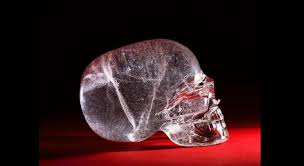
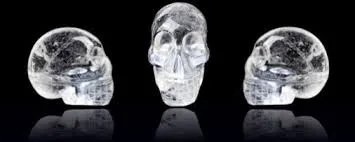
In the world of ancient artifacts, few objects spark as much fascination as the crystal skulls. Perfectly carved. Translucent. Almost… too precise.
For decades, they’ve been linked to Mesoamerican civilizations, lost knowledge, even mystical powers. Museums display them. Documentaries dramatize them. The internet amplifies them.
But here’s the part that changes everything:
What if the mystery isn’t about ancient wisdom… but about modern craftsmanship?
We’ll get there in a moment.
Because when archaeology collides with myth, the real story is often stranger than fiction.
🧠 What Archaeology and Science Actually Say
Let’s start with what we can verify.
Several crystal skulls gained fame in the late 19th and early 20th centuries. The most well-known examples are held by:
- The British Museum (London)
- The Smithsonian Institution (Washington, D.C.)
- The Musée du Quai Branly (Paris)
They were often attributed to Aztec or Maya civilizations and supposedly dated to the pre-Columbian era.
But here’s where science steps in.
In the early 2000s, researchers from the British Museum and the Smithsonian conducted detailed examinations using:
- Scanning electron microscopy (SEM)
- X-ray crystallography
- Microscopic surface analysis
The conclusion?
The tool marks found on several skulls are consistent with rotary wheels and modern lapidary equipment — tools that did not exist in pre-Columbian Mesoamerica.
In 2008, the Smithsonian publicly stated that there is no scientific evidence supporting the idea that the skulls are ancient Mesoamerican artifacts. The British Museum reached similar conclusions.
That doesn’t make them worthless.
It makes them… something else.
And this opens a bigger question:
If they’re not ancient, why were they believed to be?
🔎 What This Suggests (My Personal Reading)
When I look at this, I don’t see deception. I see something more human.
In the 19th century, Europe had an obsession with “exotic antiquities.” Collectors wanted dramatic relics from distant civilizations. The demand was enormous. Verification methods? Not so much.
Quartz was available in Brazil and Madagascar. Skilled European workshops had advanced cutting tools.
Put those together and you get:
- A market hungry for mystery
- Craftsmen capable of precision carving
- A story that sells itself
To me, this suggests a classic case of historical misattribution fueled by fascination, not a global cover-up.
There is no evidence of institutional suppression, no credible proof of supernatural origin, and the scientific consensus remains clear: these skulls were likely carved in the 19th century.
But that doesn’t end the story.
Because the real intrigue begins with perception.
And perception… can be powerful.
🗿 The Context: Why Skulls Meant Something
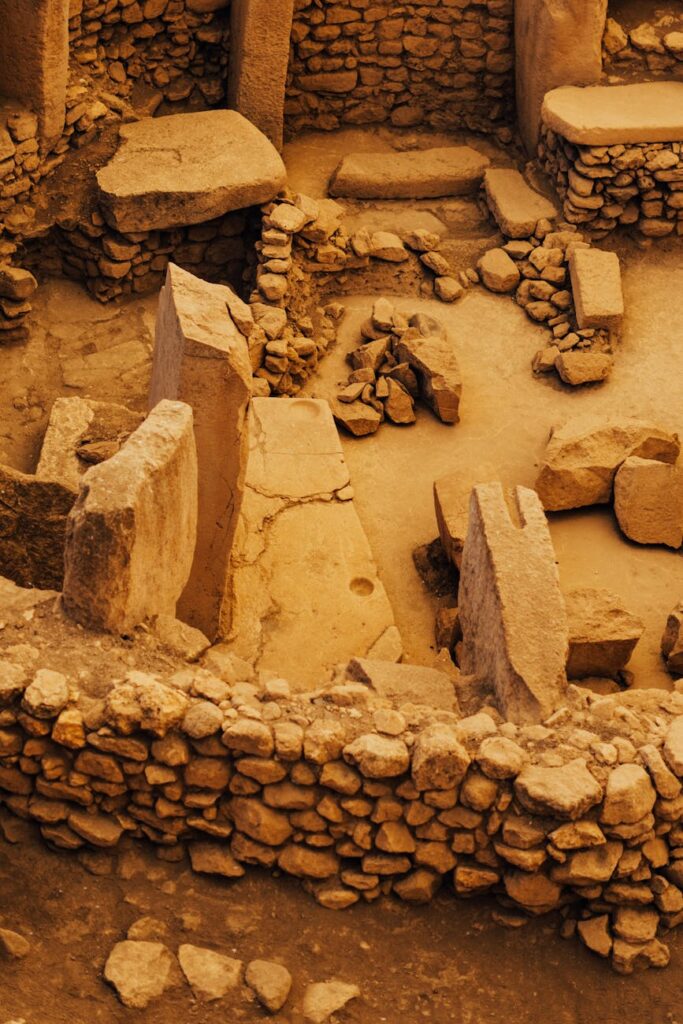
Now let’s zoom out.
In Mesoamerican cultures, skull imagery was not unusual. The Aztecs built tzompantli — skull racks displaying sacrificial remains. Skulls symbolized:
- Death
- Rebirth
- Cycles of life
- Cosmic continuity
The Maya also incorporated skeletal imagery into ritual art.
So when crystal skulls surfaced and were attributed to these cultures, the symbolism made intuitive sense. It “fit” the narrative.
It’s like finding a smartphone in a Roman ruin. If you already believe Rome had lost technology, your brain will do the rest.
But here’s the next twist:
Some skulls are carved from a single block of clear quartz — a material that is incredibly difficult to shape without advanced tools.
And that raises another staircase of curiosity:
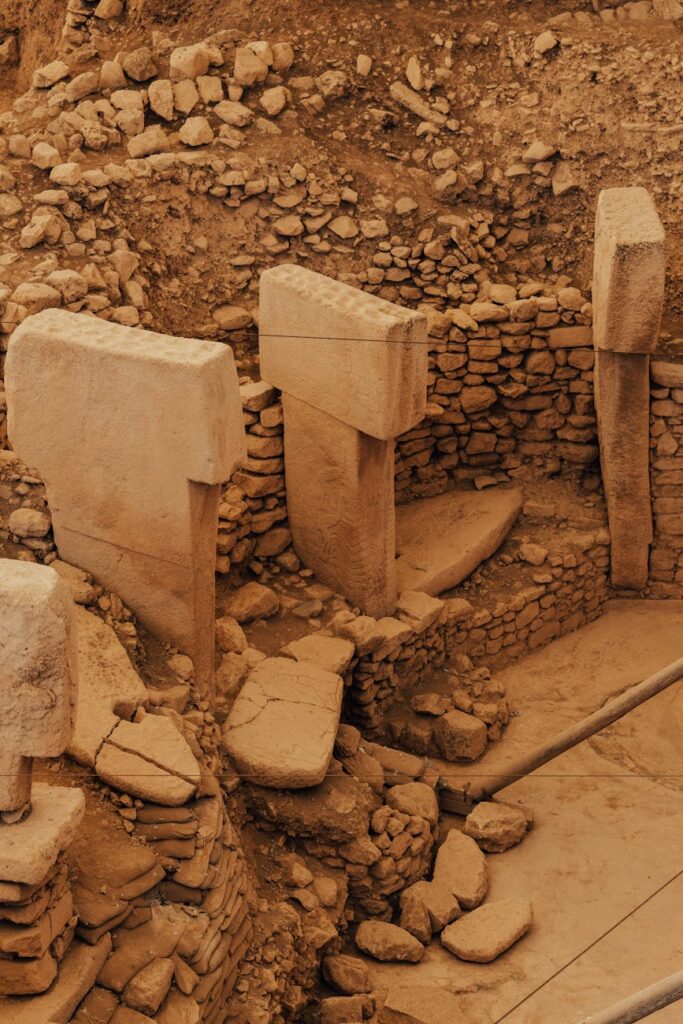
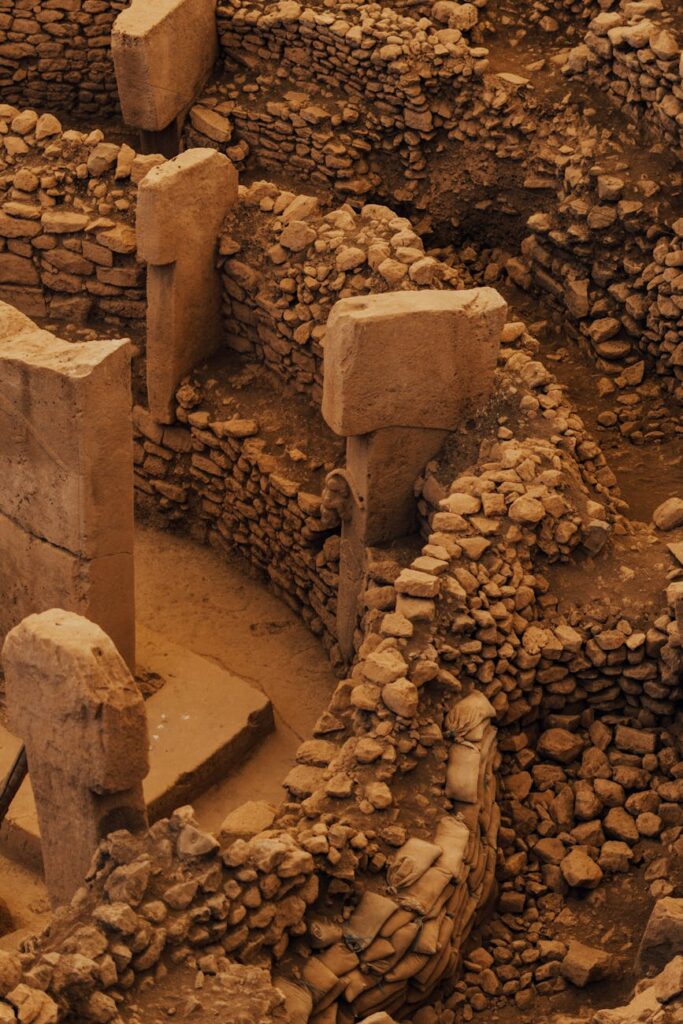
If ancient civilizations built monumental cities like Göbekli Tepe (which we’ve explored before at
Göbekli Tepe – the reboot of civilization),
could they have mastered crystal carving too?
Science says there is no evidence they did.
But the question itself reveals something deeper about us.
💎 The Engineering Problem
Quartz ranks 7 on the Mohs hardness scale.
Shaping it requires:
- Abrasive materials
- Precise rotational grinding
- Long polishing processes
Microscopic analysis shows:
- Uniform grinding patterns
- Modern-style tool marks
- Lack of residue consistent with ancient techniques
If these skulls were truly pre-Columbian, we would expect:
- Stone-tool abrasion patterns
- Irregular polishing marks
- Archaeological excavation records
Instead, many surfaced through art dealers in the 1800s — with limited documentation.
And documentation matters.
In archaeology, context is everything. An artifact without excavation records is like a sentence without punctuation — intriguing, but incomplete.
Still…
There’s something eerie about them.
Which leads us to the psychological layer.
🧠 Why Do They Feel “Otherworldly”?
Hold one in your hand (or imagine it).
It’s transparent. It refracts light. It looks alive when illuminated.
Quartz has piezoelectric properties — meaning it can generate an electrical charge under pressure. That fact alone fueled modern mystical interpretations.
But here’s the boundary line:
There is no scientific evidence that crystal skulls emit energy, store ancient knowledge, or possess consciousness.
The quartz used is ordinary mineral material.
Yet the aesthetic impact is undeniable.
It’s like a perfectly polished mirror shaped as mortality itself.
And that’s where myth breathes.
In the late 20th century, New Age movements amplified the legend of “13 crystal skulls” that would reveal cosmic knowledge when reunited. These claims are not supported by archaeological evidence or historical documentation.
But they spread.
Why?
Because humans crave artifacts that feel like keys.
Keys to lost civilizations.
Keys to hidden wisdom.
Keys to something bigger.
And that makes me think about another artifact mystery — the
Piri Reis Map of 1513.
A real historical object. A real debate. But layered with interpretations that sometimes go far beyond the evidence.
Different artifact. Same human impulse.
And here’s the loop we opened earlier:
If the skulls are modern creations… why do they still unsettle us?
🌎 What This Means Today
In an era of AI, 3D printing, and digital simulations, authenticity is harder to judge than ever.
Crystal skulls teach us something subtle but powerful:
Belief can crystallize faster than evidence.
Museums today are far more rigorous. Institutions like the Smithsonian and British Museum publicly revise interpretations when new data emerges. That transparency matters.
There is no credible evidence of suppressed discoveries.
But there is abundant evidence of how stories evolve.
And in the digital age, stories evolve at light speed.
It makes me wonder:
What objects from our era will future archaeologists misinterpret?
A VR headset in a landfill.
A silicon chip without context.
An AI-generated artifact mistaken for ritual art.
History doesn’t just preserve objects.
It preserves assumptions.
🧭 My Personal Reflection
When I first looked into crystal skulls, I wanted the mystery.
I wanted the ancient laser-like craftsmanship.
The lost civilization twist.
The “we don’t know everything” moment.
But what fascinated me more was this:
The skulls are likely modern.
The myths are modern.
The longing is ancient.
And that longing might be the real artifact.
There is no scientific support for extraordinary origin theories.
No evidence of hidden knowledge.
No proof of pre-Columbian high-tech quartz carving.
The consensus stands.
Yet the emotional pull remains.
And that’s the part we rarely analyze.
Because maybe the crystal skull isn’t a relic of the past.
Maybe it’s a mirror.
🧩 So… What’s the Detail That Changes Everything?
Remember the question we opened with?
The twist isn’t that they’re alien.
It’s not that museums are hiding something.
It’s not that ancient civilizations had secret laser tools.
It’s this:
The mystery survived even after the evidence didn’t.
And that says something profound about us.
We don’t just search for truth.
We search for awe.
Crystal skulls may not rewrite archaeology.
But they absolutely reveal something about human imagination — and how easily wonder can outpace verification.
Which raises one last question:
What other “ancient artifacts” are really reflections of modern desire?
❓ FAQ
Are crystal skulls authentic ancient artifacts?
Scientific analysis by institutions like the Smithsonian and British Museum indicates they were likely carved in the 19th century using modern tools.
Do crystal skulls have proven mystical or energetic properties?
No. There is no scientific evidence that crystal skulls emit energy, store knowledge, or possess unusual properties beyond normal quartz behavior.
Why were they believed to be ancient?
Skull symbolism existed in Mesoamerican cultures, and 19th-century antiquities markets lacked modern authentication methods, allowing misattributions to spread.
If artifacts are time capsules…
Then maybe the crystal skull is a capsule of belief.
And I can’t help but ask:
Are we studying the object…
Or ourselves?
🔓 Say “REVEAL” if you want me to investigate another artifact that science explained — but mystery refused to let go.
- Garvin (1973, pp.75-76); Hewlett-Packard (1971, p.9).
- Hewlett-Packard (1971, p.10).
- British Museum (nd-b), Jenkins (2004, p.217), Sax’et al (2008), Smith (2005), Walsh (1997; 2008)
- Michael E. Smith, “Aztec Crystal Skulls,” Publishing Archaeology Blog
- «Smithsonian puts its fake- crystal skull- on display». San Francisco Chronicle (July 18). 2008