- 🧠 What Science Actually Says About Black Holes
- ✅ 1️⃣ The Verifiable Scientific Base
- 🌌 The Wormhole Hypothesis — Physics or Sci‑Fi?
- ✅ 2️⃣ What Theoretical Physics Proposes
- 🧩 The Information Paradox — The Detail That Changes Everything
- 🌎 What This Means Today
- 🔬 The Early Universe Question
- 🧠 My Personal Reading (Hunter Mode On)
- 🔓 The Loop We Opened
- Are black holes proven to be portals?
- Could wormholes exist?
- Have scientists detected anything exiting a black hole?
🔥 Are Black Holes Portals to Another Reality? — What Relativity Suggests About the Universe’s Darkest Mystery
Black holes.
Just saying the word already bends the imagination.
According to Einstein’s theory of relativity, gravity isn’t just a force — it’s the curvature of spacetime itself. And black holes are the most extreme example of that curvature.
But here’s the detail that changes everything:
Relativity doesn’t just predict collapse. It also predicts the mathematical possibility of bridges.
We’ll get there in a moment.
Because if black holes could be portals — even theoretically — that would rewrite how we think about reality, space travel, and even consciousness.
And yes…NASA has run the numbers.
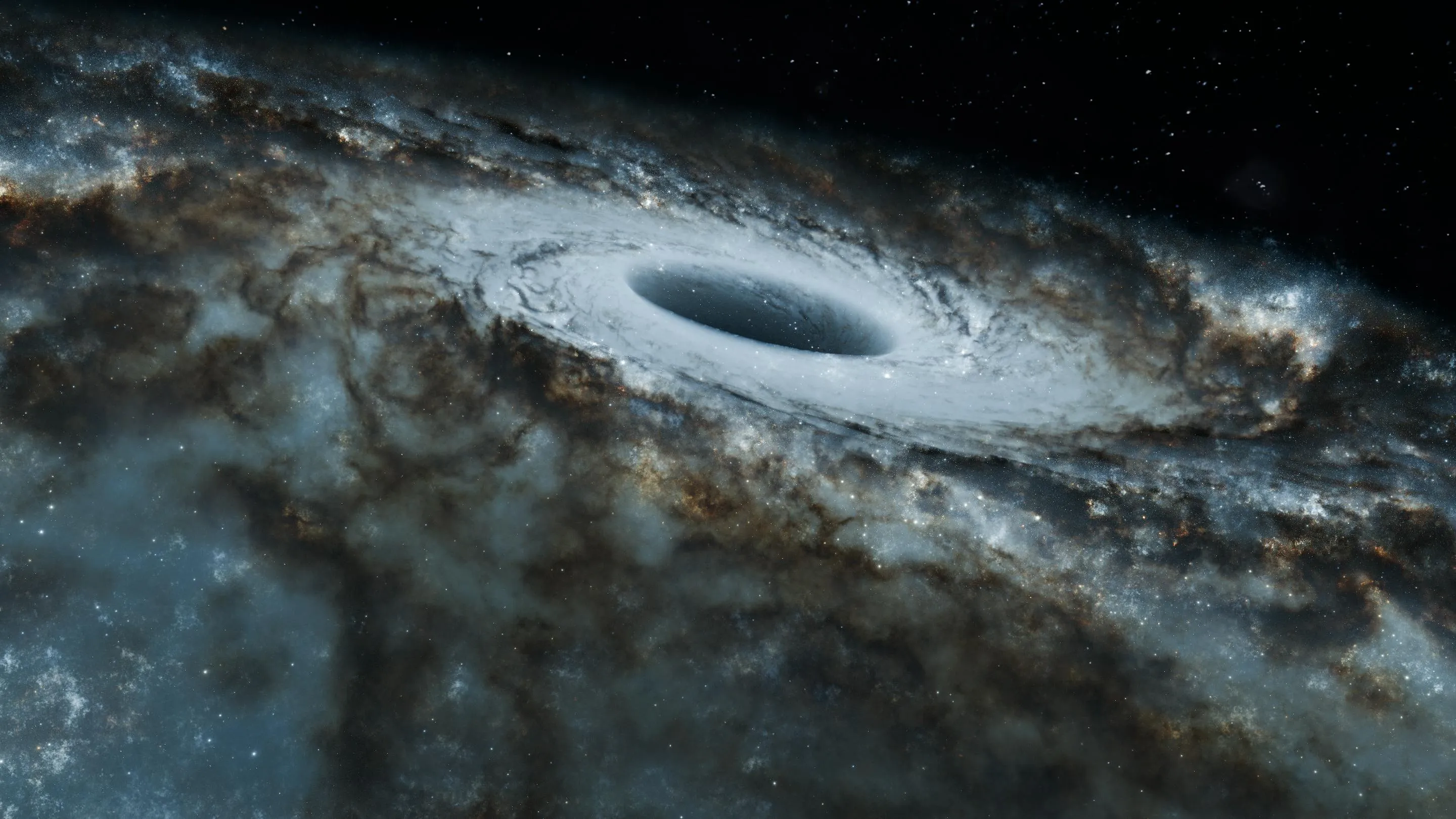
🧠 What Science Actually Says About Black Holes

Let’s start with solid ground.
✅ 1️⃣ The Verifiable Scientific Base
Black holes are regions of spacetime where gravity is so intense that nothing — not even light — can escape.
They were predicted in 1916, shortly after Einstein published General Relativity.
Confirmed evidence includes:
- Gravitational wave detections (LIGO, 2015)
- Direct imaging of a black hole’s shadow (Event Horizon Telescope, 2019)
- Stellar motion measurements around Sagittarius A* (UCLA & Max Planck Institute)
NASA defines a black hole as the end state of massive stars collapsing under their own gravity.
At the center lies a singularity — a point where density becomes infinite and known physics breaks down.
But here’s where things get interesting
Einstein’s equations also allow something called an Einstein–Rosen bridge.
In simple terms?
A theoretical tunnel connecting two distant points in spacetime.
You might know it by another name: wormhole.
But before imagination runs wild:
There is no experimental evidence that black holes are wormholes.
The scientific consensus remains that black holes are gravitational collapse objects, not proven portals.
Still…
The math doesn’t forbid it.
And that’s the crack in the door.
🔭 This reminds me of how ancient maps like the Piri Reis Map challenge our assumptions — not by denying reality, but by expanding the frame.
So the real question becomes:
If relativity allows bridges… what would it take for one to actually exist?
🌌 The Wormhole Hypothesis — Physics or Sci‑Fi?

✅ 2️⃣ What Theoretical Physics Proposes
In 1935, Einstein and Nathan Rosen described a mathematical solution now known as the Einstein–Rosen bridge.
It connects two black holes.
But there’s a problem.
It collapses instantly.
For a wormhole to remain open, physics suggests it would require:
- Exotic matter
- Negative energy density
- Conditions never observed in nature
Some quantum field experiments (like the Casimir effect) demonstrate tiny negative energy fluctuations — but nothing on cosmic scale.
Later, physicists like Kip Thorne explored whether advanced civilizations could stabilize a wormhole.
Still purely theoretical.
No observational evidence.
No detected portal signatures.
No anomalous matter flows exiting black holes.
And importantly:
There is no indication of hidden suppression or cover-up. Observations from NASA, ESA, and global observatories remain consistent with gravitational collapse models.
But here’s where curiosity climbs another step.
If nothing escapes a black hole…
How do we reconcile that with quantum mechanics?
And this is where things get spicy.
🧩 The Information Paradox — The Detail That Changes Everything
Stephen Hawking introduced a problem in the 1970s.
Quantum theory says information cannot be destroyed.
But black holes appear to erase it.
That contradiction is known as the black hole information paradox.
Recent developments — including work from researchers at Harvard, Stanford, and CERN — suggest information may be encoded on the event horizon itself.
This idea evolved into:
- Holographic principle
- Quantum entanglement links (ER = EPR conjecture by Maldacena & Susskind)
Here’s the mind-bender:
Some physicists propose that entangled particles could be connected through microscopic wormholes.
Not sci-fi tunnels.
But quantum geometric connections.
Does that mean black holes are literal portals?
No.
Does it mean spacetime may be more interconnected than we thought?
Possibly.
And this is the loop we opened at the beginning:
Relativity bends spacetime.
Quantum mechanics entangles it.
What if reality isn’t a flat stage… but a folded one?
We’re not claiming hidden dimensions are accessible through black holes.
There is no experimental proof of inter-universal travel.
But the equations hint that spacetime might be more elastic than intuition suggests.
And that changes the way I look at the night sky.
🌎 What This Means Today

Why does this matter now?
Because we’re entering an era of:
- Advanced gravitational wave astronomy
- Quantum computing breakthroughs
- Private space industry expansion
Understanding black holes isn’t philosophical.
It affects:
- Cosmology models
- Early universe research
- The fate of information in quantum systems
Even the growing space economy depends on deeper understanding of gravitational physics. (We explored this in the context of orbital expansion here.)
And here’s something that hits differently:
If black holes are not portals…
They are still cosmic archives.
Compressed history.
Frozen light.
Gravitational memory wells.
Like a hard drive of collapsed stars — except we don’t yet know how to read it.
And that’s the next staircase of curiosity:
If wormholes require exotic matter…
Could the early universe have had it?
🔬 The Early Universe Question

Some cosmological models suggest the early universe had extreme quantum fluctuations.
Inflation theory describes spacetime expanding faster than light.
Certain speculative frameworks propose primordial wormholes could have formed.
But again:
There is no confirmed observation of such structures.
The cosmic microwave background, measured by NASA’s WMAP and ESA’s Planck mission, shows no clear evidence of wormhole signatures.
The consensus remains intact.
Black holes are gravitational collapse endpoints.
Not interdimensional doors.
Still…
Science evolves by testing the edges of what equations allow.
Not by dismissing them.
🧠 My Personal Reading (Hunter Mode On)
In my reading, black holes are less about portals and more about limits.
They mark the boundary where our two best theories — relativity and quantum mechanics — refuse to shake hands.
That tension fascinates me.
Not because it proves alternate realities.
But because it proves we don’t fully understand reality yet.
There’s something poetic about that.
We live in a universe where:
- Stars die.
- Spacetime bends.
- Information might never truly vanish.
And the deepest mystery isn’t whether there’s “another side.”
It’s whether reality itself is layered in ways our senses can’t directly access.
But let me be clear:
There is no scientific confirmation that black holes are portals to another universe.
There is no evidence of hidden dimensions accessible through them.
The scientific consensus stands.
And respecting that is essential.
Still…
The equations whisper possibilities.
And sometimes whispers are more interesting than shouts.
🔓 The Loop We Opened
At the beginning, I said there’s a detail that changes everything.
Here it is:
Relativity does not forbid bridges.
Quantum mechanics does not forbid hidden connections.
Nature simply hasn’t shown us one — yet.
Black holes might not be portals.
But they are proof that reality is stranger than classical intuition.
And if spacetime can fold…
What else can it do?
🌌
If tomorrow’s telescopes detect something unexpected near an event horizon — would we even recognize it?
Or would it take another Einstein to decode it?
Diga “SINGULARITY” if you want to explore what happens inside the event horizon next.
❓ FAQ
Are black holes proven to be portals?
No. There is no scientific evidence supporting black holes as portals to other universes. They are gravitational collapse objects predicted by general relativity.
Could wormholes exist?
Theoretically, yes. Einstein’s equations allow them mathematically. However, no observational proof exists, and stabilizing one would require exotic matter not yet observed.
Have scientists detected anything exiting a black hole?
No. Observations show that nothing escapes beyond the event horizon, aside from theoretical Hawking radiation.
Black holes may not be gateways to another reality.
But they are gateways to better questions.
And sometimes… that’s even more powerful.
👁️🗨️ Say “TRANSCEND” if you’re ready to question what spacetime really is.
Reference:
- Thorne, Kip S. ; Hawking, Stephen (1994). Agrawal, Milan (ed.). Buracos Negros e Distorções Temporais: O Legado Escandaloso de Einstein (1ª ed.). WW Norton & Company . ISBN 978-0-393-31276-8Consultado em 12 de abril de 2019 .
- Weinberg, Steven (1972). Gravitação e Cosmologia . John Wiley & Sons. ISBN 978-0-471-92567-5.
- Einstein, Albert (1915). “Die Feldgleichungen der Gravitation” [Equações de Campo de Gravitação]. Sitzungsberichte der Königlich Preußischen Akademie der Wissenschaften (em alemão): 844–847 . Bibcode : 1915SPAW…….844E . hdl : 2027/umn.31951d000117420 .
- Janssen, Michel; Renn, Jürgen (2015). “Arco e andaime: como Einstein encontrou suas equações de campo” . Physics Today (Artigo de destaque). 68 (11): 30– 36. Bibcode : 2015PhT….68k..30J . doi : 10.1063/PT.3.2979 . hdl : 11858/00-001M-0000-002A-8ED7-1 .
- Fraknoi, Andrew ; Morrison, David ; Wolff, Sidney C. (2022). “Buracos Negros de 24,5”. Astronomia 2e (PDF) (2ª ed.). OpenStax . pp. 839–846 . ISBN 978-1-951693-50-3. OCLC 1322188620 .
- Reynolds, Christopher S. (2019). “Observando a rotação de buracos negros”. Nature Astronomy . 3 : 41–47 . arXiv : 1903.11704 . Bibcode : 2019NatAs…3…41R . doi : 10.1038/s41550-018-0665-z .
- Carroll, Sean M. (2019). Espaço-tempo e Geometria . doi : 10.1017/9781108770385 . ISBN 978-1-108-48839-6.
- Mummery, Andrew; Ingram, Adam; et al. (junho de 2024). “Emissão contínua de dentro da região de mergulho dos discos de buracos negros” . Monthly Notices of the Royal Astronomical Society . 531 (1): 366– 386. arXiv : 2405.09175 . doi : 10.1093/mnras/stae1160 .
- Machida, Mami; Matsumoto, Ryoji (2003). “Simulações magnetohidrodinâmicas tridimensionais globais de discos de acreção de buracos negros: explosões de raios X na região de mergulho”. The Astrophysical Journal . 585 (1): 429– 442. arXiv : astro-ph/0211240 . Bibcode : 2003ApJ…585..429M . doi : 10.1086/346070 .
- Prisco, Jacopo (17 de maio de 2024). “Estudo comprova que buracos negros têm uma ‘região de mergulho’, exatamente como Einstein previu” . CNN .
- Wald, Robert M. (1984). Relatividade Geral . Editora da Universidade de Chicago. ISBN 978-0-226-87033-5. Arquivado do original em 11 de agosto de 2016. Consultado em 23 de fevereiro de 2016 .
- Celotti, A.; Miller, JC; Sciama, DW (1999). “Evidência astrofísica da existência de buracos negros”. Gravidade Clássica e Quântica . 16 (12A): A3– A21. arXiv : astro-ph/9912186 . Bibcode : 1999CQGra..16A…3C . doi : 10.1088/0264-9381/16/12A/30