


Artemis II: What Will Astronauts See During the 40 Minutes of Silence on the Far Side of the Moon?
You know that feeling when the Wi-Fi goes out and you feel disconnected from the world? Now, imagine that multiplied by 380,000 kilometers, inside a metallic capsule, where silence isn’t just the absence of sound, but the total absence of humanity. This is exactly what the four Artemis II astronauts are about to face.
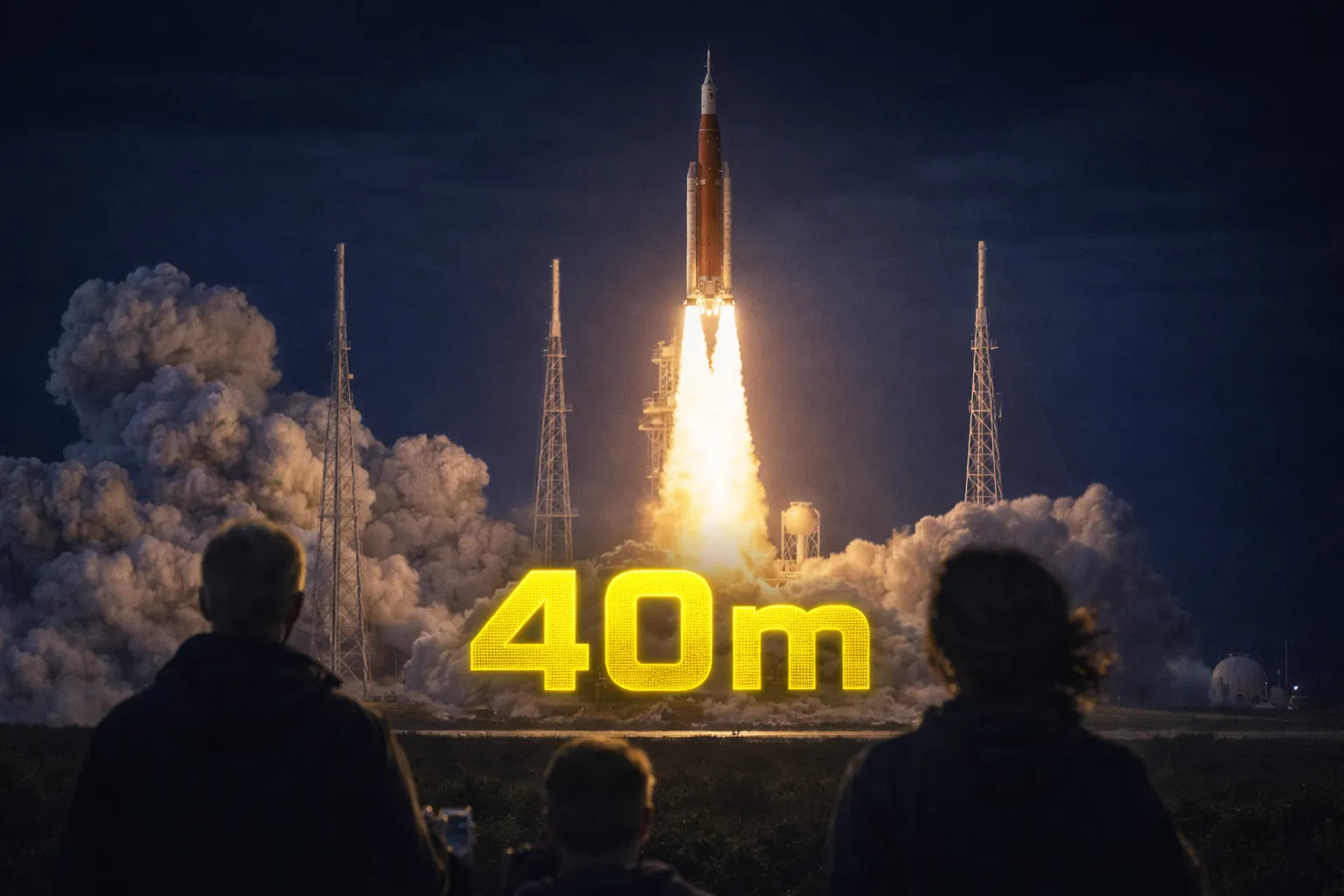
We are on the verge of witnessing man’s return to the lunar neighborhood, but there is one specific stretch of the journey that keeps me up at night: the 40 minutes of absolute silence as they cross the far side of the Moon. No radio, no signal, no Earth on the horizon. Just them and the abyss.
“But there is a detail that changes everything…” and we’ll get to that in a moment.
The Shadow Zone: Why does the radio go silent?
Many people think the “dark side” of the Moon is always dark. That’s just movie myth. It receives as much sunlight as the side we see. The correct term is the far side, and the big issue here is the Moon’s own mass. It acts as a colossal rock shield, blocking any radio waves coming from Earth.
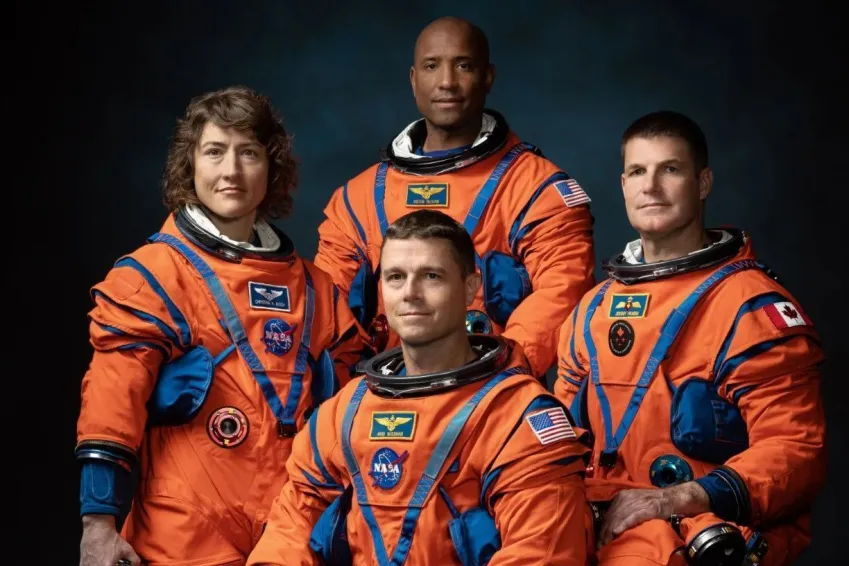
When the Orion capsule disappears behind the lunar curvature, NASA and the entire world will be blind. For 40 minutes, Reid Wiseman, Victor Glover, Christina Koch, and Jeremy Hansen will be the most isolated human beings in recent history. What goes through the mind of someone who knows that if something goes wrong there, no one will hear their cry?
- Total Isolation: No contact with Mission Control.
- Geological Shield: Thousands of miles of rock blocking signals.
- Cosmic Solitude: Earth completely disappears from view.
But if they can’t talk to us, what will they be observing down there? We’ll get to that in a moment.
What will human eyes see after 50 years?
Unlike the side we see every night, which is full of “seas” of solidified lava (those dark spots), the far side is a geological war zone. It is saturated with craters—a much more chaotic and aggressive texture. It’s like comparing a paved highway to a dry, rocky riverbed.
The Artemis II astronauts won’t land, but they will pass low enough to see details that no satellite photo can convey with emotional fidelity. They will see the Aitken Basin, one of the largest impact craters in the solar system. It’s a scar so deep it exposes what lies inside the lunar mantle.
The question I ask myself as an investigator is: will our current technology capture something that the Apollo missions, with their film cameras, missed? “But there is a detail that changes everything…”.
The “Overview Effect” in total darkness
There is a phenomenon called the Overview Effect, where astronauts report a profound cognitive shift when seeing Earth from space. But what happens when you lose sight of Earth? The Apollo 8 crew described the far side as a “vast, lonely, forbidding-type existence.” However, they were focused on survival.
The Artemis II crew will have ultra-high-definition cameras and a window into the unknown. They will see the glow of the stars without the interference of light reflected from Earth. The blackness of space will be, for the first time in half a century, truly black.
Curiosity → Answer → New Curiosity → Revelation. The answer is that they will see the lunar terrain with disturbing clarity. The new curiosity is: what if they see lights or anomalies that shouldn’t be there? The revelation? Science hopes to find ice deposits and clues about the origin of Earth itself in those shadows.
The 40 minutes that define the future
These 40 minutes aren’t just a “gap” in the schedule. They are the ultimate test for Orion’s autonomy. It’s the moment when the machine needs to be perfect on its own. For the astronauts, it’s the most radical moment of introspection a human can experience.
They will see the Earthrise as they emerge from the far side. Imagine the relief of seeing that blue dot reappear after the silence. It’s the signal that humanity is still there and that the radio will crackle back to life with friendly voices.
But one final reflection remains: what does the silence of the Moon have to tell us about our own fragility? This is the final loop. Perhaps what they “see” in those 40 minutes isn’t just rock and dust, but the real realization that we are a species trying to take the next step in a very, very large backyard.