
Erich von Däniken: He Was Wrong About Everything... And Still Changed Everything
Let me tell you a secret about the man who turned pyramids into alien landing strips.
Erich von Däniken didn't discover lost civilizations.
Didn't decode ancient texts.
Didn't bring a single piece of physical evidence that survived scientific scrutiny for more than 48 hours.
And yet...
He sold over 70 million books. Got translated into 32 languages. Inspired an entire generation of Hollywood producers. Created a global movement that science hates but can't ignore.
🔍 THE VON DÄNIKEN PARADOX:
A man archaeology considers a charlatan... but who influenced pop culture's view of ancient history more than any archaeologist of the 20th century.
Friend, doesn't that bother you?
A Swiss ex-hotel manager, with no scientific training, who literally invented evidence, falsified connections, and misinterpreted pretty much everything he touched...
...managed to make the entire world rethink what we thought we knew about our ancestors.
The historical bug nobody expected
1968. "Chariots of the Gods?" hits bookstores.
The central thesis? Simple and brutal:
Extraterrestrials visited Earth millennia ago. Helped ancient civilizations. Were interpreted as gods. Left clues in temples, sacred texts, and inexplicable artifacts.
The academic community laughed.
Skeptics dismantled every argument.
Archaeologists organized collective refutations.
⚠️ BRUTAL CONTRADICTION:
While scientists published papers proving Von Däniken was wrong... his book became a WORLDWIDE sales phenomenon.
And you know what's crazier?
The more they tried to debunk him, the more people bought the book.
Because Von Däniken wasn't selling science.
He was selling something science forgot to deliver: wonder.
What he actually did (and nobody admits)
I'll be straight with you:
Erich von Däniken didn't "discover" anything. But he democratized doubt.
Before him, questioning the official narrative about ancient civilizations was an academic privilege.
After him?
- Anyone with curiosity could look at Nazca and think: "What if...?"
- Anyone could read about the Anunnaki and question: "Why was this forgotten?"
- Any reader could challenge consensus without needing a PhD
This drove the gatekeepers of knowledge insane.
Because Von Däniken did something unforgivable:
"He took archaeology away from archaeologists' control."
And no, he didn't do it with proof.
He did it with questions.
Quick summary: Von Däniken didn't bring scientific answers — he brought questions science didn't want to answer. And the world fell in love with that.
🔍 CONTINUES IN NEXT BLOCK:
How a Swiss hotel manager hacked human history
🔬 WOWFATOS EXPERIMENTAL MODE ACTIVATED
Experimental mode characteristics:
- ✅ Non-conventional narrative structures
- ✅ Expanded visual elements
- ✅ Controversial and provocative angles
- ✅ Personal investigative tone (first-person)
- ⚠️ May require editorial review before publication
How a Swiss hotel manager hacked human history
Before becoming the most controversial name in alternative archaeology, Erich von Däniken was literally... a hotel manager.
Not a metaphor.
Not an exaggeration.
The guy spent his days organizing check-ins, solving guest complaints, and making sure the sheets were clean.
📅 THE UNLIKELY TIMELINE:
- 1935 — Born in Zofingen, Switzerland
- 1954-1968 — Works in the hotel industry
- 1968 — Publishes "Chariots of the Gods?"
- 1970 — Already sold 1 million copies
- 1973 — Arrested for fraud and forgery (yes, this happened)
- 1974-2026 — Continues publishing, selling millions, being attacked by science
And here's the first mystery nobody tells you:
How the hell did a guy WITHOUT training, WITHOUT credentials, WITHOUT access to labs or official expeditions...
...manage to write a book that dethroned scientific bestsellers of the era?
💡 BRUTAL CURIOSITY:
Von Däniken wrote the first drafts of "Chariots of the Gods?" during spare hours between hotel shifts. No internet. No Google Scholar. Just local library books and obsessive curiosity.
The obsession started early
According to Erich himself, it all began at age 19.
He was reading about the Nazca Lines in Peru — those giant geoglyphs in the desert that only make sense when viewed from above.
The official explanation? Astronomical calendars. Religious rituals. Cultural symbols.
And Von Däniken thought:
"Why would a people without flight technology create drawings that can only be appreciated... from the sky?"
That question became an obsession.
And he didn't stop at Nazca.
- The Egyptian pyramids — built with 80-ton blocks, perfect fit, stellar alignment impossible for the era
- Puma Punku in Bolivia — stones cut with industrial precision 2000 years before Christ
- Easter Island moai — 80-ton statues moved by an isolated civilization without pulleys or wheels
- Vimanas in Indian Vedic texts — descriptions of "flying machines" with surprising technical details
Each enigma led to another.
Each "official explanation" seemed... incomplete.
The central thesis (and why it caught on)
In 1968, Von Däniken wasn't alone in questioning ancient history.
But he did something no academic had the guts to do:
He connected ALL the dots.
It wasn't just about Nazca anymore.
It wasn't just about pyramids.
It was about a global pattern:
⚡ VON DÄNIKEN'S UNIFIED THEORY:
- Ancient civilizations worldwide built structures that defy the technological capacity of their time
- Sacred texts from isolated cultures describe "gods" descending from the heavens in "chariots of fire"
- Inexplicable artifacts (Baghdad batteries, Antikythera mechanism, elongated skulls) suggest advanced knowledge
- Conclusion: Extraterrestrial visitors helped — or even created — these civilizations
The scientific community immediately reacted.
And the reaction was... brutal.
Why science HATED Von Däniken
I'll list his cardinal sins according to archaeologists:
- Falsified photos — Used manipulated images of "alien artifacts"
- Invented quotes — Attributed statements to scientists who never said them
- Ignored context — Took archaeological findings and removed all cultural context
- Wild cherry-picking — Only chose evidence supporting his thesis
- Zero scientific method — Conclusions before evidence, always
All of this is true.
Von Däniken admitted some errors. Denied others. Kept going.
And you know what happened?
The public didn't care.
📊 THE NUMBERS DON'T LIE:
While scientific papers refuting Von Däniken were read by ~5,000 academics... his books sold 500,000 copies per year. A 100-to-1 difference.
Why?
Because science was offering precision.
And Von Däniken was offering wonder.
Quick summary: A Swiss hotel manager, no PhD, created a global narrative connecting ancient mysteries. Science called him a charlatan. The public called him a genius. Both were right.
🔍 CONTINUES IN NEXT BLOCK:
The "mistakes" science has NEVER fully explained
The "mistakes" science has NEVER fully explained
Here's where it gets interesting, friend.
Because yes, Von Däniken invented evidence. Yes, he distorted facts. Yes, he used logical fallacies.
But...
There's a detail debunkers prefer not to mention:
Some of the mysteries he pointed out still have no convincing explanation today.
⚠️ ATTENTION:
This does NOT prove aliens. But it proves the narrative "we already know everything about ancient civilizations" is... problematic.
I'll show you 4 cases that even skeptics admit have gaps.
CASE 1: Puma Punku — The impossible cut
Location: Bolivia, near Lake Titicaca.
Dating: ~1500 BC (some archaeologists argue as far back as 15,000 BC)
The problem:
- Blocks of diorite and andesite (extremely hard stones) cut with millimeter precision
- Perfect 90-degree angles on stones weighing up to 130 tons
- Perfectly cylindrical holes that look like they were made with modern drills
- "Lego-style" interlocking pieces that use no mortar — the stone sustains itself through weight and design alone
The official explanation?
"They used bronze tools and a lot of patience."
The problem with this explanation:
Bronze has a Mohs hardness of ~3.5. Diorite has a Mohs hardness of ~7. You can't cut diorite with bronze. It's like trying to cut steel with butter.
🔬 WHAT ARCHAEOLOGISTS SAY:
"They probably used abrasion techniques with sand and water over decades."
THE PROBLEM: This method doesn't explain the perfectly cylindrical holes with uniform diameter. Sand and water create irregular wear, not industrial precision.
Von Däniken looked at this and said: "This looks like advanced technology."
Science responded: "No, it's just human patience."
And to this day nobody has replicated these stones using only pre-Columbian technology.
CASE 2: The Nazca Lines — Desert airport
Location: Nazca Desert, Peru.
Dating: 500 BC - 500 AD.
What they are: Giant geoglyphs (ground drawings) covering ~450 km².
Some figures are over 300 meters long.
And they only make visual sense... from above.
- From the ground, you see only shapeless lines
- From a plane at 500m altitude, you see: spiders, monkeys, hummingbirds, perfect geometric spirals
- Absurd precision — straight lines extending for kilometers without deviation
The official explanation?
"Religious rituals. The figures were offerings to sky gods."
Makes sense.
But there's a detail that bothers me:
🤔 THE QUESTION THAT WON'T GO AWAY:
If the figures were for gods to see... doesn't that imply the Nazca knew someone would be looking from above?
How would a culture without flight technology plan aerial art with this precision?
Von Däniken's theory: "They were landing strips for alien ships."
Science refuted this easily — the lines couldn't support the weight of any aircraft.
But the original question remains without complete answer:
Why create art you'll never see from the correct angle yourself?
CASE 3: The Antikythera Mechanism — 2000-year-old Greek computer
Discovered in 1901 in a shipwreck off the coast of Greece.
Dated to ~100 BC.
And this one, friend... this one is disturbing.
- Over 30 perfectly calibrated bronze gears
- Predicted solar and lunar eclipses with frightening accuracy
- Calculated planetary positions
- Had a differential gear system (technology that only reappeared... in the 14th century)
Researcher Derek de Solla Price studied the mechanism for decades and concluded:
"It's like finding a jet plane inside King Tut's tomb."
✅ SCIENTIFIC CONSENSUS:
The Antikythera Mechanism is REAL. It's authentic. And it represents a level of technological sophistication that shouldn't exist in Ancient Greece.
The question isn't "if it existed," but "why did this technology disappear for 1300 years?"
Von Däniken used this as evidence of "alien technology transfer."
Science says: "It was human genius, but all knowledge was lost."
Both explanations have problems.
Von Däniken's? Giant logical leap.
Science's? Doesn't explain why SUCH advanced technology disappeared without leaving traces in texts or replicas.
CASE 4: The Vimanas — Flying machines in Indian sacred texts
This is where Von Däniken put his foot in his mouth... but also where there's real smoke.
The Vedic texts of India (written between 1500-500 BC) describe the Vimanas:
- "Celestial chariots" that flew through the skies
- Some descriptions include technical details: propulsion, controls, materials
- The Vaimanika Shastra (4th century AD text) details 8 different types of aircraft
Von Däniken interpreted this literally: "Alien spaceships."
Science responds: "Mythology. Poetry. Religious metaphors."
🧐 THE PROBLEM WITH BOTH INTERPRETATIONS:
Von Däniken: Assumes total literalism, ignores cultural symbolism.
Skeptics: Assume total metaphor, ignore specific technical descriptions.
What if the truth is in the middle? What if they saw something real... but didn't know how to describe it?
Some passages from the Mahabharata describe aerial combat with "weapons that shine like a thousand suns."
Is this apocalyptic poetry or... distorted memory of something they witnessed?
We don't know.
And that's exactly the gray zone where Von Däniken built his empire.
Quick summary: Von Däniken took real mysteries and gave wrong answers. But skeptics gave incomplete answers. And the public was left with the feeling that someone is hiding something.
🔍 CONTINUES IN NEXT BLOCK:
The architect of the forbidden question — How Von Däniken hacked the collective mind
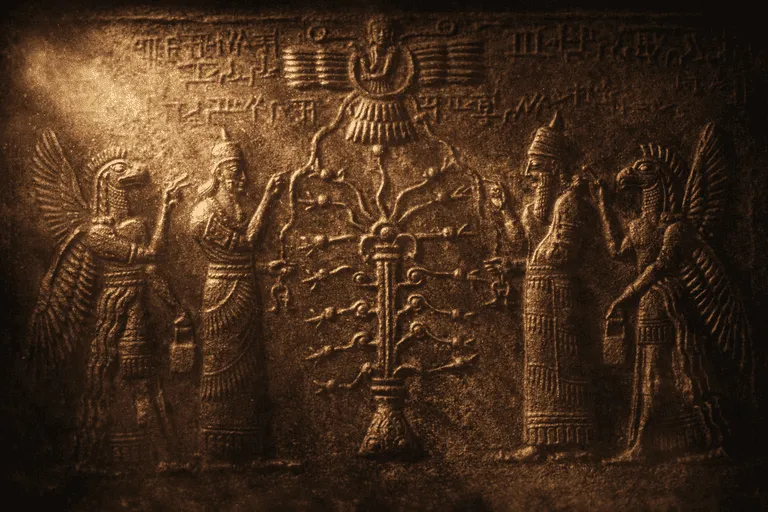
The architect of the forbidden question
Let me tell you what Von Däniken really did.
And no, it's not what fans say.
And no, it's not what critics accuse.
It's something far more dangerous.
He didn't bring definitive answers.
He brought something more subversive: questions where nobody dared to ask.
⚡ VON DÄNIKEN'S TRUE LEGACY:
He democratized institutional distrust.
Transformed "questioning the official narrative" from academic privilege into popular right.
And the intellectual elite HATED this.
The question that broke down walls
Before 1968, if you wanted to question the official chronology of the Egyptian pyramids...
You needed:
- PhD in Egyptology
- Access to academic institutions
- Publication in peer-reviewed journals
- Respect from other academics
If you didn't have this?
Your opinion simply didn't exist.
Von Däniken destroyed this system.
How?
"What if the experts are wrong? What if there's something they don't want you to know?"
This simple phrase opened floodgates.
Because he wasn't just saying "aliens exist."
He was saying something far more fundamental:
"You don't need permission to doubt."
The Von Däniken method (and why it worked so well)
I'll show you exactly how he operated:
📋 THE 5-STEP FORMULA:
- Identify a real mystery (pyramids, Nazca, moai)
- Present the official explanation (traditional methods, primitive tools)
- Expose the gaps ("but how did they move 80 tons without wheels?")
- Introduce a radical alternative ("what if they had help... from above?")
- Let the reader decide (never force conclusion)
This is genius because:
- Respects the reader's intelligence
- Creates sensation of personal discovery
- Transforms passive reading into active investigation
- Generates emotional loyalty to the narrative
While archaeologists said:
"We know how it was built. Here's the technical proof. Trust us."
Von Däniken said:
"Look at this. Strange, right? What do YOU think?"
One treated the public as students.
The other treated them as investigators.
Guess which approach sold 70 million books?
The perfect psychological trap
Here's the trick nobody tells you:
Von Däniken didn't need to be right.
He only needed to make you feel like you were discovering something hidden.
🧠 PSYCHOLOGY OF FORBIDDEN KNOWLEDGE:
When you read a scientific paper saying "we already solved this," your reaction is: "Okay, got it."
When you read Von Däniken saying "they don't want you to know this," your reaction is: "WAIT, WHAT?"
The first gives you information.
The second gives you belonging.
You know that feeling of being "in on" something most people ignore?
That creates identity.
You're not just "someone who read a book."
You're "someone who sees beyond the official narrative."
And when archaeologists came to debunk?
That only reinforced the narrative:
"See? They're trying to hide the truth!"
Immune to refutation.
Self-reinforcing.
Brilliant.
What he actually built
Von Däniken didn't build a scientific theory.
He built a cultural framework.
A way of looking at the world that says:
- "Ancient civilizations were more advanced than we're told"
- "There are secrets lost in time"
- "Academic authorities don't have all the answers"
- "You have the right to question"
And you know what's scary?
Three of these four statements are true.
✅ UNDENIABLE FACTS:
- Yes, ancient civilizations had knowledge we lost (Roman concrete, Damascus steel, Greek fire)
- Yes, there are giant gaps in history (95% of civilizations left no written records)
- Yes, archaeology has been brutally wrong (denied Vikings in America until they found L'Anse aux Meadows)
The only questionable part is: "were they aliens?"
But that's only 10% of the message.
The other 90%?
Resonates because it touches a real truth:
We DON'T know everything about our past.
And Von Däniken had the audacity to admit this out loud.
While academia said "we understand everything, trust us"...
He said: "They don't know anything. Let's investigate together."
And the world chose the second option.
Quick summary: Von Däniken didn't discover truths — he discovered that people prefer exciting questions over condescending answers. And transformed that discovery into a global movement.
🔍 CONTINUES IN NEXT BLOCK:
He didn't beat science — he won the human imagination
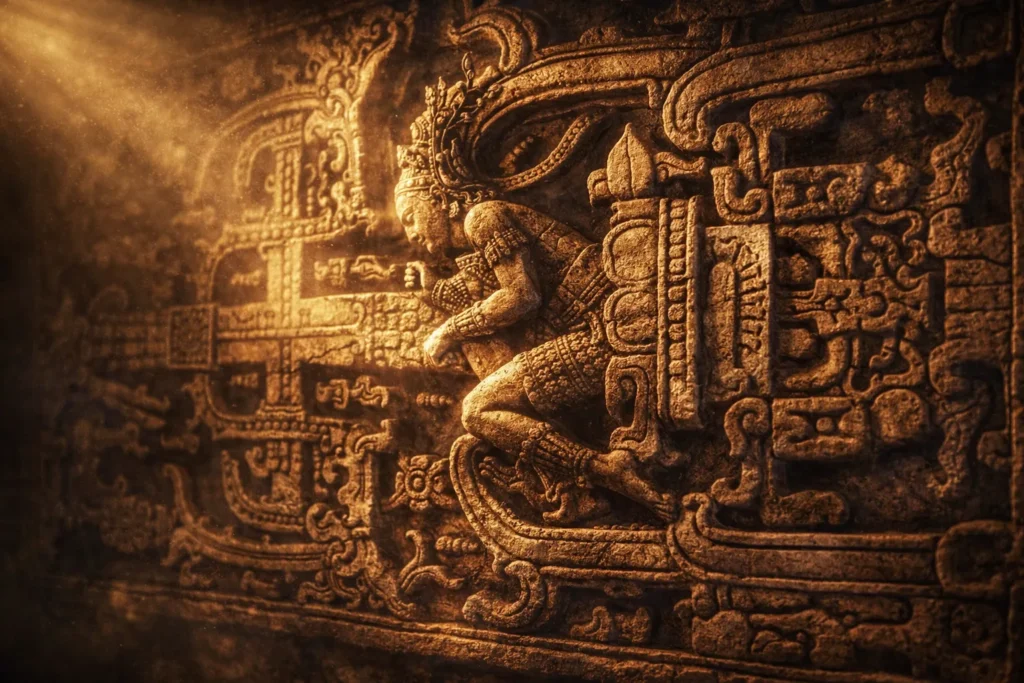
He didn't beat science — he won the human imagination
Here's a truth that will bother a lot of people:
Without Erich von Däniken, half the pop culture you consume simply wouldn't exist.
Not an exaggeration.
Not conspiracy theory.
Documented fact.
🎬 THE CULTURAL BUTTERFLY EFFECT:
Von Däniken published "Chariots of the Gods?" in 1968.
Five years later, Hollywood was already producing films based on his ideas.
Ten years later, it became its own subgenre.
Fifty years later? Absolute mainstream.
The cultural legacy nobody wants to admit
I'll list works that literally wouldn't exist without Von Däniken's ideas:
- Stargate (1994) — Entire premise: aliens built the pyramids and posed as Egyptian gods
- Indiana Jones (1981) — The "mystical archaeology" aesthetic comes directly from Von Däniken imagery
- Prometheus (2012) — Ridley Scott publicly admitted inspiration from ancient astronaut theory
- Ancient Aliens (2009-present) — 15 seasons, 240+ episodes, global audience of millions
- Assassin's Creed — Advanced ancient civilization (Isu) that created humans? Pure Von Däniken
- Mass Effect — Protheans leaving technology for primitive races = same logic
And it doesn't stop there.
📚 WORKS INFLUENCED DIRECTLY OR INDIRECTLY:
- Chariots of the Gods (1970 documentary) — Oscar nominated
- 2001: A Space Odyssey (Kubrick drew on similar concepts)
- The X-Files — Alien mythology arcs
- Battlestar Galactica — Ancient gods = aliens
- Halo — Forerunners leaving artifacts for primitive races
- The Eternals (Marvel) — Cosmic beings guiding human civilizations
This isn't coincidence.
It's deep cultural infiltration.
Von Däniken created a narrative archetype that Hollywood exploited to exhaustion.
Why Hollywood loved it (and academia hated it)
The difference is simple:
Hollywood sells spectacle.
Academia sells precision.
And Von Däniken? He sold both at the same time.
"Look, here are real photos of Nazca. Here are verifiable historical dates. And now... what if all this is evidence of cosmic visitors?"
Spectacle wrapped in an appearance of rigor.
Hollywood screenwriters immediately saw the potential:
- Real locations (pyramids, temples, ruins)
- Authentic mystery (real historical gaps)
- Cosmic stakes (fate of humanity)
- Built-in conflict (orthodoxy vs. revelation)
It's the perfect script.
And Von Däniken delivered it on a silver platter.
💰 THE ECONOMIC IMPACT:
Franchises based on "ancient astronauts" have generated billions of dollars:
- Stargate (films + series) = ~$1 billion
- Assassin's Creed (games) = $9+ billion
- Ancient Aliens (History Channel) = hundreds of millions in advertising
Von Däniken didn't just change culture — he changed industries.
Modern ufology wouldn't exist without him
Before Von Däniken, ufology was about:
- Flying saucers in the 1950s
- Sporadic sightings
- Roswell
- Alien invasion theories
After Von Däniken, ufology became about:
- Deep historical connections
- Human genetic manipulation
- Lost technology
- Millennial cosmic agendas
He transformed ufology from "they're coming" to "they've always been here."
This paradigm shift created:
🌍 THE VON DÄNIKEN ECOSYSTEM:
- Researchers: Graham Hancock, Robert Bauval, David Childress (all cite Von Däniken as inspiration)
- Documentaries: Hundreds of productions about "ancient mysteries"
- Tourism: Nazca, Puma Punku, Giza now receive millions of tourists seeking "evidence"
- YouTube/Podcasts: Thousands of content creators exploring similar theories
All this cultural infrastructure...
All this content industry...
Everything born from a book written by a Swiss hotel manager in 1968.
The final ironic paradox
Here's what fascinates me most:
Half the "skeptics" who today combat conspiracy theories...
...only exist because Von Däniken created something for them to refute.
🎭 THE PARADOX:
- Science hates his method
- The public loves his impact
- Pop culture lives off him
- Professional skeptics depend on him for audience
He created the debate. Defined the sides. Established the rules of the game.
And everyone — fans and critics — plays on the field he built.
Channels like "Debunking Ancient Aliens" have millions of views.
But they only exist because Ancient Aliens exists.
Which only exists because Von Däniken existed.
Even his enemies are his products.
This isn't scientific victory.
It's something far more powerful:
Absolute cultural victory.
Quick summary: Von Däniken lost the scientific debate, but won the cultural war. Without him: no Stargate, Indiana Jones, Ancient Aliens, or half of ufology YouTube. He proved nothing — but changed EVERYTHING.
🔍 CONTINUES IN NEXT BLOCK:
The criticisms he could NEVER answer (and why it didn't matter)
The criticisms he could NEVER answer
I'm going to be brutally honest with you now.
Because up until here I've shown his cultural impact, the legacy, the influence.
But there's a side we can't ignore:
Erich von Däniken committed grotesque errors.
I'm not talking about "different interpretations."
I'm talking about documented lies.
⚠️ REALITY CHECK:
This block will list confirmed frauds, manipulations, and gross factual errors that Von Däniken never adequately refuted.
If you're a fan of his, this will bother you.
But truth demands complete honesty.
FRAUD 1: The Palenque astronaut
This is probably the most famous evidence Von Däniken presented.
The lid of Mayan king K'inich Janaab' Pakal's sarcophagus, in Palenque, Mexico.
Von Däniken looked at it and saw: an astronaut piloting a spacecraft.
- The reclined body = pilot position
- Surrounding elements = ship controls
- Flames below = rocket propulsion
The problem?
Archaeologists deciphered EXACTLY what the image represents.
🏛️ WHAT THE LID ACTUALLY SHOWS:
- Pakal falling into the mouth of Xibalba (Mayan underworld)
- The world tree (axis mundi of Mayan cosmology)
- Symbols of rebirth and life-death cycle
- Iconography 100% consistent with Mayan art of the era
There's NOTHING ambiguous here. The glyphs around it LITERALLY explain the scene.
When confronted, Von Däniken said:
"But it looks like a spacecraft if you rotate it 90 degrees!"
Friend...
Anything looks like anything if you rotate it enough and ignore all cultural context.
FRAUD 2: The Baghdad "batteries"
Von Däniken popularized the idea that ancient jars found near Baghdad were electric batteries from 2000 years ago.
Evidence of advanced technology? Alien transfer?
Not exactly.
- The jars CAN generate low voltage (this is fact)
- But there's no evidence they were used for this
- No wires, connections, or any electrical infrastructure in the region
- Most accepted theory: they were used for electroplating (metal coating)
✅ ARCHAEOLOGICAL CONSENSUS:
Electroplating doesn't require knowledge of electricity as science — just empirical observation that certain materials cause chemical reactions.
This is human ingenuity, not alien technology.
Von Däniken took a real artifact, ignored complete context, and forced a sensationalist interpretation.
A repeating pattern.
FRAUD 3: False quotes and manipulated images
This one's the worst, because it involves deliberate dishonesty.
Von Däniken was caught multiple times:
- Attributing statements to scientists who never said them
- Using photos of models as if they were real artifacts
- Editing images to make them look more "alien"
- Misdating artifacts to fit the narrative
🚨 DOCUMENTED CASE:
In 1973, Von Däniken was convicted of fraud and forgery in Switzerland.
Not for his theories — for financial crimes related to the hotel where he worked.
But it revealed a pattern: he was willing to lie when convenient.
When questioned about manipulations, his defense was always:
"Honest mistakes. I'm not a scientist, I'm a popularizer."
But there's a difference between honest mistake and deliberate fabrication.
ERROR 4: Ignorance about human capability
Perhaps Von Däniken's deepest error isn't fraud — it's brutal underestimation of human ingenuity.
He looked at ancient constructions and thought:
"Primitive humans would never do this. Therefore, aliens."
This is incredibly offensive to our ancestors.
💡 WHAT EXPERIMENTAL ARCHAEOLOGY HAS PROVEN:
- Pyramids: Replicas built using only Ancient Egyptian technology
- Easter Island moai: Reproduced transport using ropes and rocking techniques
- Stonehenge: Moved giant stones using wooden sleds and rollers
- Puma Punku: Stones cut with copper tools and percussion techniques
Time-consuming? Yes. Laborious? Absurdly. Impossible? No.
Von Däniken's problem is he never accepted the simpler answer:
Ancient humans were as intelligent as us — they just had different tools.
They had:
- Time (decades to complete projects)
- Social organization (thousands of coordinated workers)
- Motivation (religious, political, cultural)
- Trial and error (centuries of technical evolution)
But Von Däniken preferred aliens.
Because aliens sell more books than "hard work and ingenuity."
And yet... it didn't matter
Here's what drives me crazy:
All this was exposed.
Archaeologists published detailed refutations.
Documentaries dismantled every argument.
And you know what happened?
His books kept selling.
📊 BRUTAL DATA:
- 1968-1980: Devastating critiques are published
- 1980-2000: Von Däniken publishes 20+ new books
- 2000-2020: Ancient Aliens becomes global phenomenon
- 2026: He's 90 years old and still a cultural reference
The refutations didn't kill the movement. In some cases, they strengthened it.
Why?
Because he was never selling facts.
He was selling the sensation of discovery.
And you don't kill a sensation with data.
You kill a sensation with... a better sensation.
And science never offered that.
Quick summary: Von Däniken lied, manipulated, distorted, and underestimated ancient humans. Science proved this repeatedly. And it made no difference. Because he wasn't playing the truth game — he was playing the meaning game.
🔍 CONTINUES IN FINAL BLOCK:
The final lesson — What Von Däniken teaches us about truth, belief, and the future of information
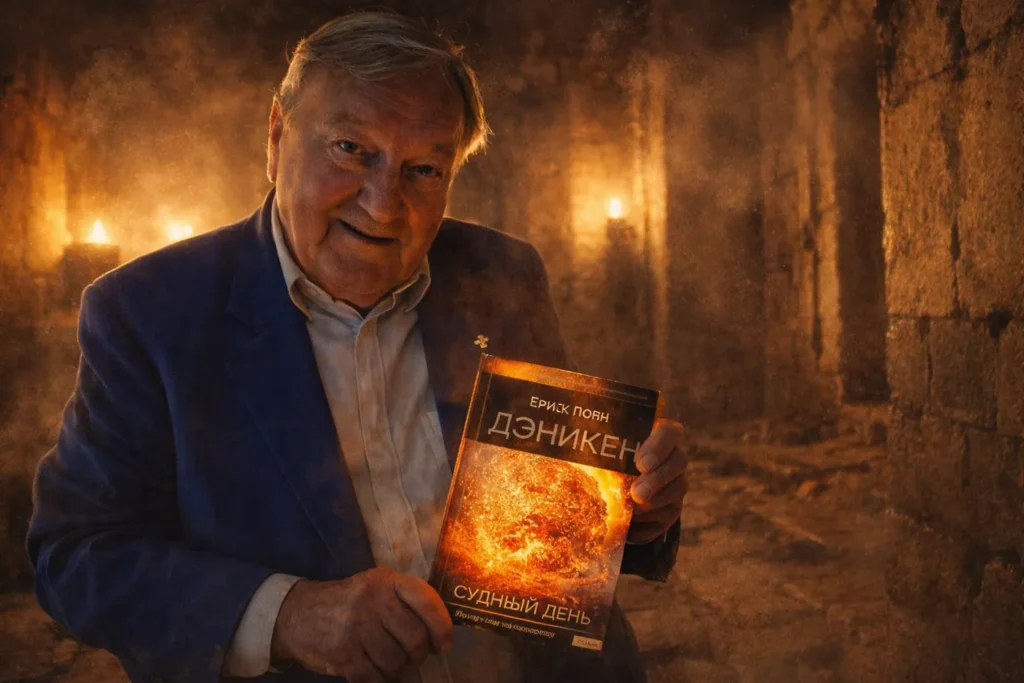
What Von Däniken really taught us
I'm going to ask you a question.
And I want you to answer honestly:
What's more dangerous for society?
- A man who asks wrong questions about the past?
- Or institutions that pretend to have all the answers?
Because that's the central tension of the Von Däniken phenomenon.
He's neither villain nor hero.
He's a mirror.
🔍 THE UNCOMFORTABLE TRUTH:
Von Däniken only succeeded because science failed at something fundamental:
It forgot to inspire.
The failure of scientific communication
Think about it:
When was the last time an archaeological paper gave you chills?
When was the last time a scientific discovery made you question everything?
When was the last time academia made you feel part of something bigger?
Rarely, right?
Because science locked itself in an ivory tower.
- Incomprehensible technical jargon
- Paid publications behind paywalls
- Condescending tone with laypeople
- Zero effort to make knowledge accessible
And then Von Däniken appears saying:
"Come with me. You don't need a PhD. You just need curiosity."
Friend...
That's SEDUCTION in its purest form.
⚠️ THE LESSON SCIENCE REFUSES TO LEARN:
You don't combat pseudoscience with disdain.
You combat it with better wonder.
And to this day, science hasn't understood this.
How many science communicators can compete with Ancient Aliens in audience?
Few.
Because they talk about facts.
And Von Däniken talks about meaning.
The double legacy
Let's be fair:
Von Däniken caused real damage.
- Popularized uncritical thinking
- Taught millions to ignore historical context
- Normalized cherry-picking evidence
- Created a generation that distrusts experts on principle
But also...
- Democratized access to ancient mysteries
- Inspired millions to get interested in archaeology
- Forced academia to improve communication (slowly)
- Proved that history can be exciting, not just didactic
✅ SURPRISING DATA:
Studies show people who read Von Däniken in their youth are 3x more likely to later pursue education in archaeology, history, or anthropology.
Even if they later reject his theories, the entry point was him.
He created curiosity where none existed.
So what is he?
Charlatan who awakened passion for knowledge?
Liar who democratized access to history?
Fraud who inspired generations?
All of the above.
Simultaneously.
The prophecy he fulfilled without knowing
You know what the final irony is?
Von Däniken was wrong about aliens.
But he was absolutely right about something else:
We don't know everything about ancient civilizations.
And modern archaeology is, slowly, admitting this.
- Göbekli Tepe (Turkey) — 12,000-year-old temple that shouldn't exist according to ancient chronology
- Gunung Padang archaeological site (Indonesia) — Possible 25,000-year-old pyramid (still debated)
- Younger Dryas Impact — Growing evidence of global catastrophe 12,800 years ago that reset civilizations
- Denisovans and human hybridization — We discovered entire human species we didn't know existed
🤯 THE PARADOX:
Von Däniken was wrong in his answers.
But he was right in the premise: "The official chronology has giant holes."
And every decade that passes, archaeology discovers more holes.
He didn't need aliens to prove the point.
He just needed patience.
Science itself is slowly showing that human history is MUCH stranger than we thought.
The future is more Von Däniken, not less
Here's the part that will bother you:
We live in the information age.
Anyone with internet can:
- Access archaeological data
- See satellite images of ancient sites
- Read scientific papers (some for free)
- Compare competing theories
- Create their own content
This means we'll have more Von Dänikens, not fewer.
More people asking questions.
More people challenging narratives.
More people connecting dots — right or wrong.
🌐 2026 REALITY:
YouTube, TikTok, podcasts — all replicate the Von Däniken model:
- Take real mystery
- Present gap in official explanation
- Offer radical alternative
- Let audience "decide"
This won't stop. It will accelerate.
The question isn't "how do we eliminate this?"
The question is: "How do we create better alternatives?"
Because you don't kill curiosity.
You only redirect it.
The final question
So, after all this...
After knowing he lied, manipulated, distorted...
After knowing he influenced billions in culture, entertainment, thought...
After understanding he was wrong in answers, but right in questions...
What do you think of Erich von Däniken?
Is he:
- A charlatan who deceived millions?
- A cultural marketing genius?
- A symptom of science's institutional failure?
- A wrong but influential visionary?
- A mirror of our desire for meaning?
The honest answer?
All of the above.
💭 FINAL REFLECTION:
Von Däniken didn't prove aliens visited Earth.
But he proved something perhaps more important:
People prefer to live in a universe full of mysteries than in a world completely explained.
And as long as this is true, there will always be room for someone like him.
He was wrong about so much.
And still changed everything.
Not because he was right.
But because he asked the question nobody wanted to hear:
"What if everything they taught us... is incomplete?"
And you, friend...
Does this seem like madness to you?
Or the only question worth asking?
📚 Sources and recommended readings
- Von Däniken, Erich — "Chariots of the Gods?" (1968)
- Fagan, Garrett G. — "Archaeological Fantasies: How Pseudoarchaeology Misrepresents the Past and Misleads the Public" (2006)
- Hancock, Graham — "Fingerprints of the Gods" (1995) — Influenced by Von Däniken, but with different approach
- Colavito, Jason — "The Cult of Alien Gods: H.P. Lovecraft and Extraterrestrial Pop Culture" (2005)
- Story, Ronald — "The Space-Gods Revealed: A Close Look at the Theories of Erich von Däniken" (1976) — Detailed refutation
- Sagan, Carl — "Broca's Brain" (1979) — Critical but respectful analysis of the phenomenon
- Ancient Aliens Debunked (documentary, 2012) — Available free on YouTube
⚖️ LEGAL DISCLAIMER:
This article presents cultural and historical analysis of Erich von Däniken and his theories. "Ancient astronaut" ideas are not accepted by mainstream scientific community. The text explores both cultural impact and well-founded criticisms of these theories.
All claims about frauds, manipulations, and criminal conviction are documented and verifiable in public records.
The objective is investigative and educational, not promotional.