- 🧠 What Science Actually Says About the Brain
- 🔎 Related thread I want to investigate next:
- 🧬 Neuroplasticity: The Brain That Rewrites Itself
- ⚡ The Detail That Changes Everything
- 🔍 This reminds me of another investigation:
- 🌍 What This Means Today
- 🧠 The Evolutionary Angle
- 🔭 Future investigation thread:
- 🧩 My Personal Reading (Hunter Mode On)
- 🔥 The Loop We Opened at the Beginning
- 🌌 Before we close…
- 1. Does neuroscience support the idea that we use only 10% of our brain?
- 2. Is there scientific evidence of hidden supernatural brain abilities?
- 3. Can consciousness expand through training or technology?
🧠 Is Human Consciousness Just the Beginning? What Neuroscience Reveals About the Brain’s Hidden Potential — And Why It Matters Now
In neuroscience, one idea keeps surfacing again and again:
we may be using the human brain in ways we barely understand.
Not the old myth that we use only 10% of it — that’s been debunked for decades by institutions like Harvard Medical School and the National Institute of Neurological Disorders and Stroke.
But something more subtle.
More unsettling.
What if consciousness itself is still an unfinished project?
There’s one detail most people overlook…
and it changes everything.
We’ll get to that in a moment.
🧠 What Science Actually Says About the Brain
Let’s start with the ground floor.
Modern neuroscience, based on research from Stanford, MIT, the Max Planck Institute, and the NIH, confirms:
- The human brain has about 86 billion neurons (University of São Paulo estimate, widely accepted).
- Each neuron can form thousands of synaptic connections.
- The brain constantly rewires itself through neuroplasticity.
- Conscious experience correlates with large-scale neural networks like the Default Mode Network (DMN) and Global Neuronal Workspace.
Brain imaging technologies like fMRI, EEG, and PET scans have mapped regions responsible for:
- Memory (hippocampus)
- Decision-making (prefrontal cortex)
- Emotion (amygdala)
- Self-referential thought (DMN)
From a scientific standpoint, consciousness emerges from coordinated neural activity.
That’s the consensus.
But here’s where things get interesting.
Even with all this data, neuroscientists still cannot fully explain how subjective experience arises from electrical signals.
This is known as:
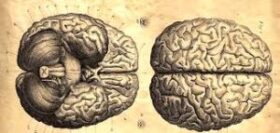
The Hard Problem of Consciousness (coined by philosopher David Chalmers).
We can measure brain activity.
We can correlate patterns.
We can predict responses.
But why does neural firing feel like something?
Why is there experience at all?
And that opens the next door.
🔎 Related thread I want to investigate next:
If consciousness emerges from networks, what happens when artificial networks grow complex enough? (This connects directly with what we explored in the evolution of artificial intelligence and the future of work.)
🧬 Neuroplasticity: The Brain That Rewrites Itself

Here’s something verifiable and extraordinary.
The brain is not static.
Research from London taxi drivers (University College London, 2000) showed that intense spatial training physically enlarged the hippocampus.
Meditation studies from Harvard (Sara Lazar, 2011) demonstrated structural brain changes in long-term practitioners.
Stroke patients can relearn functions by rerouting neural pathways.
The brain adapts.
It reorganizes.
It upgrades itself based on use.
In my reading, this suggests something profound:
Consciousness may not be a fixed setting.
It may be a dynamic capacity.
And if it can expand… how far?
But let’s stay grounded.
There is no scientific evidence of supernatural abilities or hidden psychic modules waiting to be unlocked. The scientific consensus remains that brain capabilities operate within biological limits.
Still.
Those limits may be wider than we assumed.
Which leads to the overlooked detail I mentioned earlier.
⚡ The Detail That Changes Everything

Here it is:
Most of the brain’s processing is unconscious.
According to research from Caltech and the University of Amsterdam, up to 95% of cognitive processing occurs below conscious awareness.
Your decisions.
Your emotional reactions.
Your intuitions.
They begin before “you” know them.
Experiments by neuroscientist Benjamin Libet (1980s) showed brain activity indicating a decision milliseconds before participants reported consciously choosing.
Later replications refined but did not dismiss the phenomenon.
Now pause.
If consciousness is more like a narrator than a commander…
What exactly are we?
This isn’t mysticism.
It’s mainstream cognitive science.
But it raises a bigger curiosity:
If so much happens unconsciously, can we learn to access more of it?
Or are we already experiencing the maximum integration evolution allows?
That question doesn’t have a settled answer.
And that’s where the frontier begins.

🔍 This reminds me of another investigation:
When ancient civilizations described altered states of awareness, were they mapping subjective brain experiences with mythic language? Like we saw when analyzing Göbekli Tepe and the cognitive leap of early humans.
🌍 What This Means Today

This isn’t abstract philosophy.
It’s happening now.
We are:
- Enhancing memory with nootropics
- Studying brain-computer interfaces (Elon Musk’s Neuralink, clinical trials ongoing)
- Using AI-assisted neurofeedback
- Exploring psychedelic-assisted therapy (Johns Hopkins research on psilocybin)
Johns Hopkins and Imperial College London have published peer-reviewed studies showing psychedelics can temporarily alter the Default Mode Network — often reducing rigid self-perception patterns.
Important clarification:
There is no verified evidence of superhuman cognition emerging from these methods. Clinical research focuses on therapeutic outcomes, not mystical expansion.
But here’s what fascinates me.
When the DMN quiets down, people report:
- A sense of unity
- Dissolution of ego boundaries
- Enhanced creativity
- Novel cognitive associations
If consciousness is like a spotlight, these states may widen the beam.
Not paranormal.
Just neural modulation.
And it makes me wonder:
Have we mistaken the everyday state of mind for the full spectrum of what’s biologically possible?
🧠 The Evolutionary Angle
Anthropologists and neuroscientists agree:
The prefrontal cortex expanded significantly in Homo sapiens over the last 200,000 years.
Language emerged.
Symbolic thinking flourished.
Abstract reasoning exploded.
But evolution doesn’t stop just because we invented smartphones.
Cognitive scientists propose that culture itself now shapes brain evolution.
Technology extends memory (Google).
AI extends reasoning.
Social networks alter attention spans.
We are co-evolving with our tools.
And here’s the quiet, powerful possibility:
What if the next phase of consciousness isn’t mystical…
…but technological-biological integration?
No conspiracy.
No hidden agenda.
Just observable trends in neurotechnology.
Still — and this matters — there is no scientific evidence that humans are on the verge of transcending biology or “unlocking dormant brain powers.”
The consensus remains grounded.
But evolution rarely announces itself in advance.
🔭 Future investigation thread:
If AI begins to simulate creativity convincingly, how will we redefine human uniqueness? That overlaps with themes in algorithmic behavioral influence and digital autonomy.
🧩 My Personal Reading (Hunter Mode On)
Let me step out of data for a moment.
When I look at neuroscience research, what strikes me isn’t that we have hidden magical abilities.
It’s that we barely understand the machinery generating our inner world.
We navigate reality with a device we didn’t design, can’t fully inspect from the inside, and only partially comprehend.
That’s wild.
To me, the real hidden capacity may not be telepathy or super-memory.
It may be:
- Expanded self-awareness
- Better emotional regulation
- Enhanced creative integration
- Deeper attentional control
In everyday terms?
Learning to drive the car instead of being dragged by it.
But I’m careful here.
There is no evidence of suppressed knowledge.
No scientific proof of extraordinary secret capabilities.
No indication that institutions are hiding a cognitive revolution.
The mystery isn’t censorship.
The mystery is complexity.
And complexity takes time to decode.
🔥 The Loop We Opened at the Beginning
Remember the detail that changes everything?
It’s this:
Consciousness may not be the brain’s peak function. It may be an interface.
Like a dashboard.
It shows what’s necessary for survival.
Not the full engine.
That doesn’t mean there’s a hidden cosmic mode waiting to activate.
But it does mean our subjective experience might be a simplified summary of deeper processes.
And here’s the final question I can’t shake:
If evolution built consciousness for survival…
What happens when survival is no longer our primary challenge?
Do we stabilize?
Or expand?
I don’t claim answers.
I’m investigating.
And maybe that’s the real frontier — not secret powers, but deeper understanding.
Because the human brain may not be hiding supernatural abilities.
It may be hiding untapped refinement.
Subtle.
Incremental.
Transformative.
And we’re just beginning to notice.
🌌 Before we close…
If consciousness is still unfolding, what responsibility comes with that?
Because every new cognitive tool — from meditation to AI — reshapes not just individuals, but society.
That’s not science fiction.
That’s happening now.
So maybe the question isn’t:
“Do we have hidden powers?”
Maybe it’s:
“Are we prepared to understand ourselves?”
And that…
changes everything.
❓ FAQ
1. Does neuroscience support the idea that we use only 10% of our brain?
No. Brain imaging clearly shows activity distributed across most regions, even during simple tasks. The 10% myth has been thoroughly debunked.
2. Is there scientific evidence of hidden supernatural brain abilities?
No. Current scientific consensus does not support claims of paranormal or extraordinary cognitive powers beyond biological limits.
3. Can consciousness expand through training or technology?
Research shows neuroplasticity allows structural and functional changes through learning, meditation, therapy, and possibly brain-computer interfaces. However, expansion remains within biological constraints.
🧠 If this topic sparks something in you…
Say “TRANSCEND” if you’re ready to explore the edges of human cognition.
Reference;
- Wihe, J. V. (2002). “Science and Pseudoscience: A Primer in Critical Thinking.” In Encyclopedia of Pseudoscience, pp. 195–203. California: Skeptics Society.
- Hines, T. (2002). Pseudoscience and the Paranormal. New York: Prometheus Books. p. 200
- Fodor, Jerry A. (1983). Modularity of Mind: An Essay on Faculty Psychology. Cambridge, Massachusetts: MIT Press. ISBN 0-262-56025-9 pp. 14, 23, 131
- Bunge, M. (2018). From a Scientific Point of View: Reasoning and Evidence Beat Improvisation across Fields. Cambridge: Cambridge Scholar Publishing. p. 74
- Parker Jones, O., Alfaro-Almagro, F., & Jbabdi, S. (2018). “An empirical, 21st century evaluation of phrenology.” Cortex, Volume 106. pp. 26–35. doi:10.1016/j.cortex.2018.04.011
- Graham, Patrick. (2001) Phrenology [videorecording (DVD)]: revealing the mysteries of the mind. Richmond Hill, Ont.: American Home Treasures. ISBN 0-7792-5135-0
- Bunge, M. (1985). Treatise on Basic Philosophy. Volume 7 (Part 2). Dordrecht: Reidel Publishing Company. p. 54