
- 🧭 The Silent Archives of Humanity
- 📜 What Science Actually Says
- 1️⃣ Base Factual Consensus
- 2️⃣ My Personal Reading
- 3️⃣ Explicit Boundary
- 🏛️ Context Is the Real Decoder
- 🧠 The Pattern Problem
- 🌍 Why This Matters Today
- 🔎 My Interpretation — Carefully
- 🔁 The Final Loop
- What are the most famous undeciphered ancient languages?
- Is there evidence that lost languages contain advanced hidden knowledge?
- Why is the Indus script so hard to decode?
Ancient Civilizations Left Messages We Still Can’t Read — Lost Writing Systems and the Silent Codes of History
There’s something unsettling about lost writing systems.
Not because they’re mysterious in a Hollywood way.
But because they’re silent.
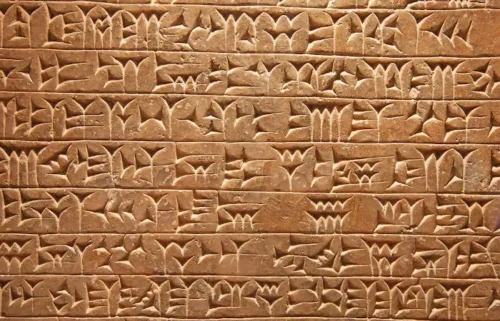
We have tablets. Stones. Scroll fragments. Entire walls covered in symbols.
And yet… we don’t understand what they say.
Ancient languages may still hold messages we haven’t decoded — not mystical prophecies, not alien manuals — but real human thoughts locked behind symbols we can’t translate.
And here’s the detail that changes everything:
What if we’re not just missing vocabulary…
What if we’re missing context?
We’ll get there in a moment.
🧭 The Silent Archives of Humanity

When we talk about lost writing systems, we’re not speculating. We’re talking about verified archaeological realities.
According to institutions like the British Museum, the Smithsonian Institution, and research from universities such as Oxford and Chicago, several major scripts remain undeciphered:
- Linear A (Minoan civilization, ~1800–1450 BCE)
- The Indus Valley Script (~2600–1900 BCE)
- Rongorongo (Easter Island)
- Proto-Elamite (ancient Iran)
- Parts of the Etruscan language
We can date them.
We can carbon-test them.
We can analyze their material composition.
But we cannot read them.
That’s not fringe. That’s peer-reviewed reality.
And it raises a very human question:
If writing is meant to preserve memory…
what happens when memory survives but meaning doesn’t?
That reminds me of the mystery behind the Piri Reis Map and Yonaguni Ruins where cartographic knowledge appears ahead of its time. Sometimes history whispers before we’re ready to hear it.
But let’s stay grounded.
📜 What Science Actually Says

1️⃣ Base Factual Consensus
Deciphering ancient languages depends on three main tools:
- A bilingual key (like the Rosetta Stone for Egyptian hieroglyphs)
- A large body of repeated text
- Cultural continuity or contextual clues
When Jean-François Champollion decoded hieroglyphs in 1822, he had Greek text alongside Egyptian symbols. That parallel changed everything.
But with scripts like Linear A, we don’t have a Rosetta Stone.
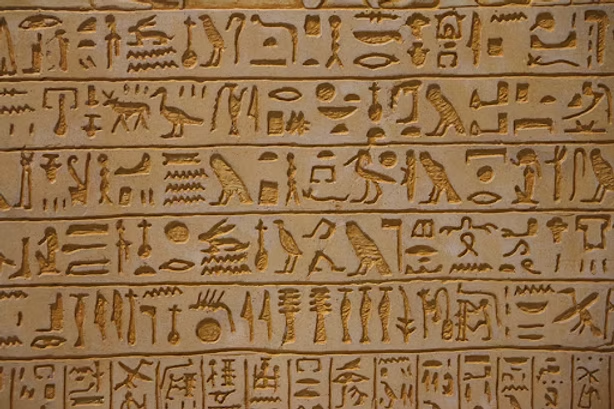
The Indus script, studied by researchers at Harvard and the University of Washington, contains thousands of inscriptions — but most are extremely short. Five symbols. Seven at most.
It’s like trying to decode a language using only license plates.
Scholars debate whether the Indus symbols even represent a full linguistic system or a proto-writing structure used for trade and administration.
There is no scientific evidence of hidden suppression or lost grand revelations. The academic consensus is clear:
We simply don’t have enough data.
2️⃣ My Personal Reading
When I look at those tiny Indus seals — animals carved above strange symbols — I don’t see mysticism.
I see logistics.
Trade.
Administration.
Ownership.
But I also see something deeper.
These weren’t primitive societies. The Indus cities had:
- Sophisticated urban planning
- Advanced drainage systems
- Standardized weights
- Long-distance trade networks
And yet their voice is gone.
That makes me wonder: how much of human intelligence disappears not with collapse… but with translation failure?
3️⃣ Explicit Boundary
There is no evidence of conspiracy, no proof of erased knowledge. The absence of translation is due to limited data and historical disruption. The scientific consensus remains valid.
But…
If writing is civilization’s hard drive, what happens when the file format becomes obsolete?
🏛️ Context Is the Real Decoder

Here’s where it gets interesting.
Decoding a language is not just about matching symbols.
It’s about reconstructing an entire worldview.
When archaeologists excavated Göbekli Tepe in Turkey — dated to around 9600 BCE and studied by institutions like the German Archaeological Institute — they found monumental pillars carved with animals and abstract symbols.
No writing.
But communication.
Symbolic thought.
Ritual expression.
It challenges the idea that complex symbolism began with agriculture.
I explored that shift in more depth in this analysis of Göbekli Tepe. It feels like civilization rebooted earlier than we expected.
Now imagine this:
What if some undeciphered scripts are embedded in symbolic systems we don’t fully grasp?
Linear B (used by the Mycenaeans) was decoded in the 1950s by Michael Ventris.
For decades, experts assumed it was unrelated to Greek.
They were wrong.
It was an early form of Greek.
Which raises a provocative but grounded question:
What if Linear A is related to something we already know… but we’re looking at it through the wrong lens?
We’ll circle back to that.
🧠 The Pattern Problem

Modern computational linguistics — including AI models used in universities like MIT and Stanford — has attempted to analyze undeciphered scripts statistically.
Researchers examine:
- Symbol frequency
- Pattern repetition
- Positional rules
- Structural entropy
Some studies suggest the Indus script behaves statistically like a real language.
Others argue it lacks sufficient complexity.
The debate continues.
But here’s what fascinates me:
We now use artificial intelligence to decode ancient human intelligence.
It’s like asking a new mind to interpret an old one.
And that connects directly to our present.
Because today, we’re creating data formats future generations may struggle to read.
Think about it.
Would someone 3,000 years from now understand a USB drive?
Or would it be their version of an Indus seal?
That makes me think of how fast technology evolves — something I discussed when exploring the future of work and artificial intelligence. Progress accelerates. Context evaporates.
Which leads to the bigger question:
Are we more advanced — or just temporarily legible?
🌍 Why This Matters Today

Lost languages are not just archaeological puzzles.
They are warnings.
Civilizations don’t just fall.
They fade linguistically.
When Spanish conquistadors burned Mayan codices, vast amounts of knowledge were erased. Today, scholars at institutions like the University of Texas continue efforts to reconstruct Mayan hieroglyphics — and progress has been significant.
But many other systems didn’t leave enough behind.
Climate change.
War.
Migration.
Cultural assimilation.
Language extinction still happens today. According to UNESCO, nearly 40% of the world’s languages are endangered.
That’s not ancient history.
That’s now.
Every lost language takes with it:
- Unique ecological knowledge
- Oral histories
- Cultural identity
- Cognitive frameworks
And here’s the uncomfortable loop:
We study ancient silence…
while creating future silence.
🔎 My Interpretation — Carefully
I don’t believe ancient civilizations left secret codes predicting our era.
There’s no evidence of advanced hidden technology in undeciphered scripts.
But I do believe something equally profound:
We underestimate how fragile meaning is.
Civilization isn’t just buildings and tools.
It’s shared understanding.
And understanding requires continuity.
When continuity breaks, even the most advanced society can become unreadable.
Like a book without a key.
And here’s the detail I promised we’d return to:
What if the biggest message ancient civilizations left us isn’t in the symbols themselves…
…but in the fact that we can’t read them?
Maybe the message is about impermanence.
About humility.
About how intelligence without preservation becomes noise.
🔁 The Final Loop
We often imagine the past as primitive and the present as enlightened.
But what if future archaeologists look at us and say:
“They had vast knowledge… but we can’t decode their storage systems.”
What if we become Linear A?
There is no evidence that ancient scripts hide supernatural revelations.
There is no scientific support for extraordinary hidden knowledge.
But there is overwhelming evidence that human meaning can disappear.
And that’s powerful enough.
So here’s the question I’ll leave you with:
If you could send one message 5,000 years into the future —
how would you ensure it could actually be understood?
🔓 Say “REVELA” if you want to explore another forgotten code of history.
❓ FAQ
What are the most famous undeciphered ancient languages?
Linear A, the Indus Valley Script, Rongorongo (Easter Island), Proto-Elamite, and parts of Etruscan remain undeciphered.
Is there evidence that lost languages contain advanced hidden knowledge?
No. There is no scientific evidence supporting extraordinary claims. The difficulty lies in limited data and missing bilingual references.
Why is the Indus script so hard to decode?
Most inscriptions are extremely short, offering limited linguistic patterns. Without longer texts or a bilingual key, translation remains speculative.
Humanity built monuments of stone.
But its most fragile creation was always meaning.
And meaning…
requires someone who can read it.
REFERENCE:
- “Aequian – MultiTree”. LINGUIST List. Retrieved 4 September 2023.
5th to 3rd centuries BC.
- “Nordisk samekonvensjon” [Nordic Sami Convention] (PDF) (in Norwegian). 26 October 2005. Archived from the original (PDF) on 11 April 2007. Retrieved 4 September 2023.
- “Ancient Macedonian”. LINGUIST List. Retrieved 30 January 2024.
Survived until the early 1st millennium AD.
- Versteegh, Kees (2006). Eid, Mushira (ed.). Encyclopedia of Arabic Language and Linguistics. Brill.
- Mozarabic language at the Encyclopædia Britannica