- 🔥 A Solar Storm Could Trigger a Global Blackout — But Here’s the Detail That Changes Everything
- 🌞 What Science Actually Says About Solar Storms
- ⚡ The Carrington Event (1859)
- ⚡ The Quebec Blackout (1989)
- 🌍 The Invisible Infrastructure Most People Forget
- 🛰️ Would Satellites Fall From the Sky?
- 🔌 Could the Power Grid Collapse Globally?
- 🧠 My Personal Reading of This
- 🌐 The Modern Risk: It’s Not 1859 Anymore
- 💡 So… Could a Solar Storm Actually “Break the Internet”?
- 🌌 The Psychological Blackout
- 🌞 What This Suggests About Our Future
- 🧭 Conclusion — Should We Be Worried?
- ❓ FAQ
- 1️⃣ Can a solar storm permanently destroy the internet worldwide?
- 2️⃣ How much warning would we have before a major solar storm hits Earth?
- 3️⃣ What was the strongest solar storm in recorded history?
🌞 Could a Solar Storm Shut Down the Entire Internet? — The Science Behind a Possible Global Blackout
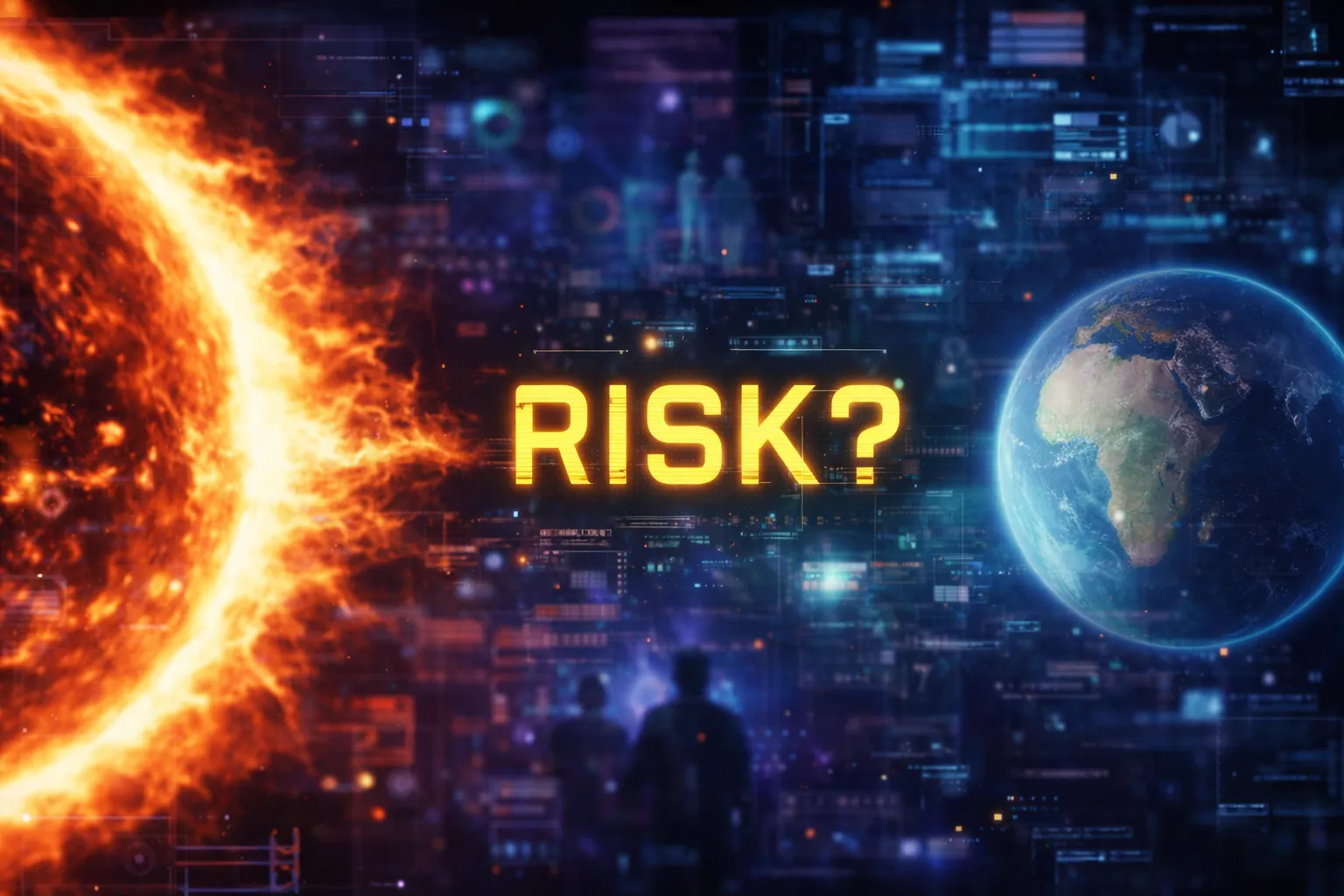
🔥 A Solar Storm Could Trigger a Global Blackout — But Here’s the Detail That Changes Everything

Imagine waking up tomorrow and… nothing loads.
No internet.
No banking systems.
No GPS.
No cloud servers.
No stock market updates.
Just silence.
It sounds like the script of a dystopian movie. But the phrase solar storm isn’t science fiction — it’s astrophysics. And yes, scientists have openly discussed the possibility that an extreme solar event could disrupt large portions of Earth’s digital infrastructure.
But here’s the detail that changes everything…
It’s not about frying your phone.
It’s about something far more invisible.
We’ll get to that in a moment.
🌞 What Science Actually Says About Solar Storms

Let’s start with the factual baseline.
A solar storm is typically triggered by a coronal mass ejection (CME) — a massive burst of plasma and magnetic field released from the Sun’s surface.
When directed toward Earth, these eruptions interact with our planet’s magnetosphere, potentially generating:
- Geomagnetic storms
- Disruptions in satellite communications
- Power grid instabilities
- Radio blackouts
According to NASA and the National Oceanic and Atmospheric Administration (NOAA), solar activity follows an approximately 11-year cycle. We are currently approaching a solar maximum phase, expected around 2025–2026.
Historically, we have records of powerful events:
⚡ The Carrington Event (1859)
- Strongest solar storm on record
- Telegraph systems caught fire
- Auroras visible near the equator
- No modern grid existed yet
⚡ The Quebec Blackout (1989)
- Geomagnetic storm collapsed Quebec’s power grid
- 6 million people lost electricity for 9 hours
These are documented events. No speculation. No conspiracy. Peer-reviewed history.
But here’s the bigger question:
If something similar happened today… in a world wired together by fiber optics and satellites… what would break first?
And why?
🌍 The Invisible Infrastructure Most People Forget

Here’s the twist.
The internet isn’t floating in “the cloud.”
It’s physical.
It lives in:
- Undersea fiber optic cables
- Terrestrial power grids
- Satellite constellations
- Data centers dependent on electricity
According to research from University College London (UCL) and studies published in journals like Space Weather, long conductive lines — especially undersea cables — are particularly vulnerable to geomagnetically induced currents (GICs).
Why?
Because during a strong geomagnetic storm, Earth’s magnetic field fluctuates. That fluctuation induces electrical currents in long conductors.
Think of it like shaking a giant invisible magnetic blanket around the planet.
Longer wires = more current.
Submarine cables stretch for thousands of kilometers.
That’s the fragile point.
Not your router.
The backbone.
And that changes the narrative completely.
🛰️ Would Satellites Fall From the Sky?
Short answer: probably not.
Long answer: it depends on intensity.
NASA and ESA data show that solar storms can:
- Increase atmospheric drag on low-Earth orbit satellites
- Disrupt GPS accuracy
- Damage satellite electronics in extreme cases
In 2022, SpaceX lost 40 Starlink satellites due to increased atmospheric drag caused by a geomagnetic storm.
That wasn’t apocalyptic.
But it was a preview.
Now imagine scaling that intensity.
Still, let’s be precise:
There is no scientific evidence suggesting a solar storm would permanently erase the internet worldwide.
Infrastructure damage? Possible.
Temporary regional outages? Plausible.
Permanent global digital extinction? No scientific support for that claim.
And that distinction matters.
🔌 Could the Power Grid Collapse Globally?
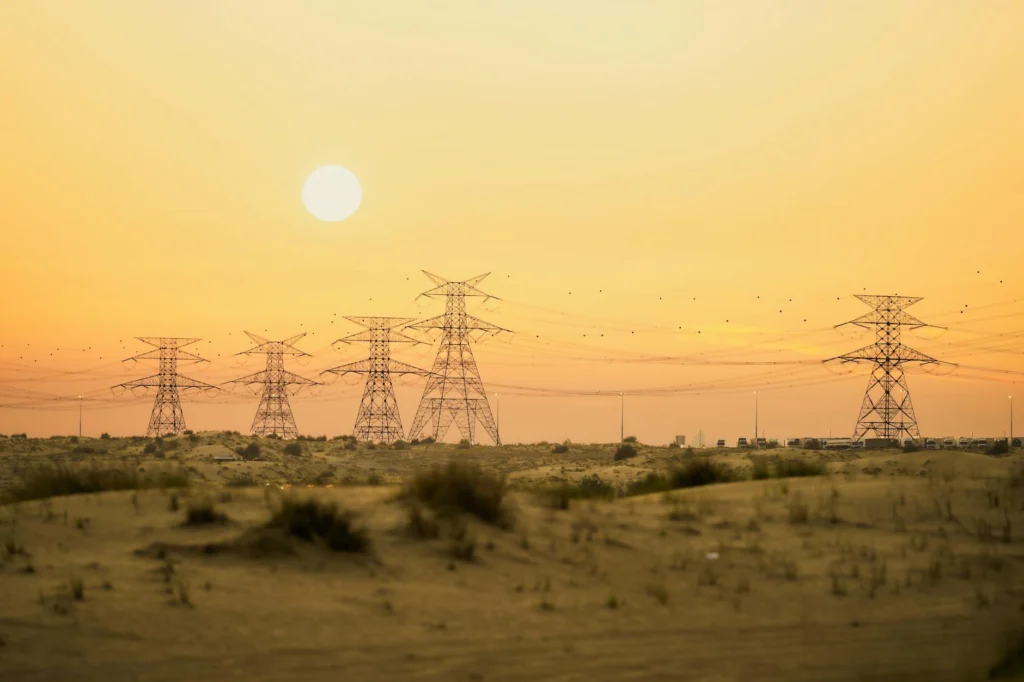
The real vulnerability lies in high-voltage transformers.
These transformers:
- Are expensive
- Are custom-built
- Take months (sometimes years) to replace
The U.S. National Academy of Sciences has warned that a Carrington-level event could cause prolonged regional blackouts.
But global synchronized failure?
That’s unlikely.
Power grids are regionally segmented. Failures would vary by latitude and infrastructure resilience. Countries closer to geomagnetic poles are at higher risk.
For example:
- Canada
- Northern Europe
- Parts of the United States
Equatorial regions are less exposed.
Again — nuance over panic.
🧠 My Personal Reading of This
Here’s where I shift from data to reflection.
When I first read about the Carrington Event, I imagined firestorms in the sky.
But what unsettled me more wasn’t flames.
It was silence.
Our civilization runs on synchronization:
- Financial systems
- Logistics
- Emergency services
- Cloud-based storage
- AI systems
- Even remote work culture
I recently explored how dependent we are becoming in the future of work and AI-driven infrastructure. The more digital we become, the more we rely on uninterrupted connectivity.
A severe solar storm wouldn’t be dramatic like an explosion.
It would be more like someone pulling the nervous system out of a body.
Not destroying it.
Just disconnecting signals.
And that makes me think…
Are we building resilience at the same speed as we’re building dependence?
🌐 The Modern Risk: It’s Not 1859 Anymore
Here’s the paradox.
We are more vulnerable.
But we are also more prepared.
Organizations actively monitoring solar weather include:
- NASA’s Solar Dynamics Observatory
- NOAA’s Space Weather Prediction Center
- ESA’s Space Weather Service Network
We now receive advance warning — typically 15 to 60 minutes after a CME detection, depending on instruments like DSCOVR positioned between Earth and the Sun.
That’s not a lot of time.
But it’s enough to:
- Power down vulnerable transformers
- Put satellites into safe mode
- Alert aviation systems
Mitigation plans exist.
Are they perfect? No.
But they’re real. Documented. Public.
And importantly:
There is no evidence of any hidden suppression of solar risk data, nor any indication of a concealed global threat narrative. Scientific consensus remains transparent and grounded in observed solar physics.
💡 So… Could a Solar Storm Actually “Break the Internet”?
Here’s the honest answer.
It could cause:
- Regional internet outages
- Satellite disruptions
- Power grid damage
- Financial transaction delays
- GPS instability
It could disrupt global supply chains.
But a permanent, planet-wide digital extinction event?
There is currently no scientific basis for that scenario.
The more realistic scenario is uneven disruption.
Some regions go dark.
Others remain stable.
Restoration takes days to months, depending on severity.
Still…
Even temporary fragmentation of the global internet would feel like a planetary blackout.
And psychologically, that impact could be enormous.
🌌 The Psychological Blackout
We rarely talk about this.
We’ve never experienced a global internet silence.
Not even during wars.
Not during pandemics.
Not during financial crises.
The internet has become our collective memory.
If a solar storm fractured connectivity, even temporarily, we’d confront something unusual:
Analog reality.
Books instead of browsers.
Cash instead of apps.
Maps instead of GPS.
Not apocalypse.
But friction.
And friction feels catastrophic when you’re used to frictionless living.
That’s the detail that changes everything.
It’s not about physical destruction.
It’s about cognitive shock.
🌞 What This Suggests About Our Future
If solar storms are inevitable (and they are), then resilience must evolve too.
Maybe that means:
- Hardening transformers
- Diversifying grid design
- Shielding critical undersea cable repeaters
- Building faster-replaceable infrastructure
It also raises a deeper question:
As we expand into orbital economies — like I explored in the rise of the space economy — are we factoring in solar risk proportionally?
Because the Sun isn’t malicious.
It’s just active.
And it doesn’t negotiate with Wi-Fi.
🧭 Conclusion — Should We Be Worried?
Not panicked.
But aware.
A solar storm capable of triggering major infrastructure disruption is scientifically plausible. It has happened before in less technologically dependent eras.
It will happen again.
The real question isn’t:
“Will the Sun attack us?”
It’s:
Are we designing a civilization that can survive temporary silence?
And here’s the final loop.
If a massive solar storm hit tomorrow…
Would you even know where your offline world begins?
❓ FAQ
1️⃣ Can a solar storm permanently destroy the internet worldwide?
There is no scientific evidence supporting permanent global internet destruction. Severe regional disruptions are possible, but permanent extinction is unlikely.
2️⃣ How much warning would we have before a major solar storm hits Earth?
Typically 15–60 minutes after CME detection by space weather monitoring systems like NOAA and NASA.
3️⃣ What was the strongest solar storm in recorded history?
The Carrington Event of 1859 remains the strongest documented geomagnetic storm.
🌞 If this topic intrigued you, say “DESCLASSIFICA” and we can explore what scientists are predicting for the next solar maximum cycle.
Because the Sun is quiet…
Until it isn’t.