- 🔍 What Science Says About Yonaguni
- 🕰️ The Ice Age Context: Could It Have Been Above Water?
- 🧠 Underwater Archaeology: What We Know for Sure
- 🌍 What Yonaguni Means Today
- 🎭 Multiple Perspectives: Geologists vs. Alternative Theorists
- 🔹 Geologists say:
- 🔹 Some independent researchers suggest:
- 🔥 The Detail That Changes Everything
- 🌊 My Personal Take (Without Escaping the Evidence)
- 🌎 Why This Matters in the Modern World
- 🌊 Open Conclusion
- ❓ FAQ
- 1️⃣ Is the Yonaguni Monument proven to be man-made?
- 2️⃣ Could it have been above water in the past?
- 3️⃣ Would it rewrite history if proven artificial?
🌊 Could the Yonaguni Submerged City Rewrite Human History? — Underwater Archaeology and the Mystery Beneath Japan
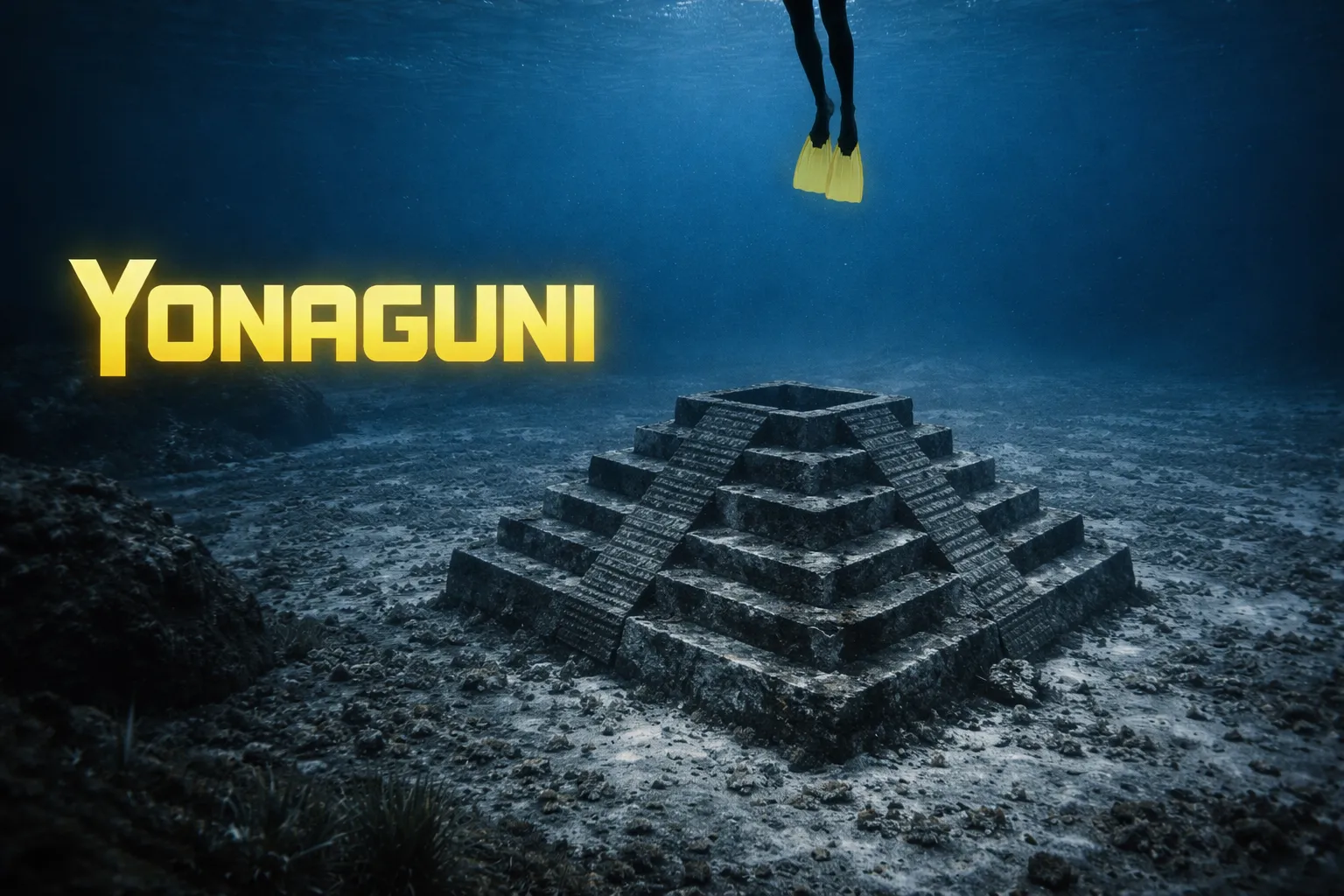
In 1986, a diver off the coast of Yonaguni Island, in Japan, found something that still divides scientists today.
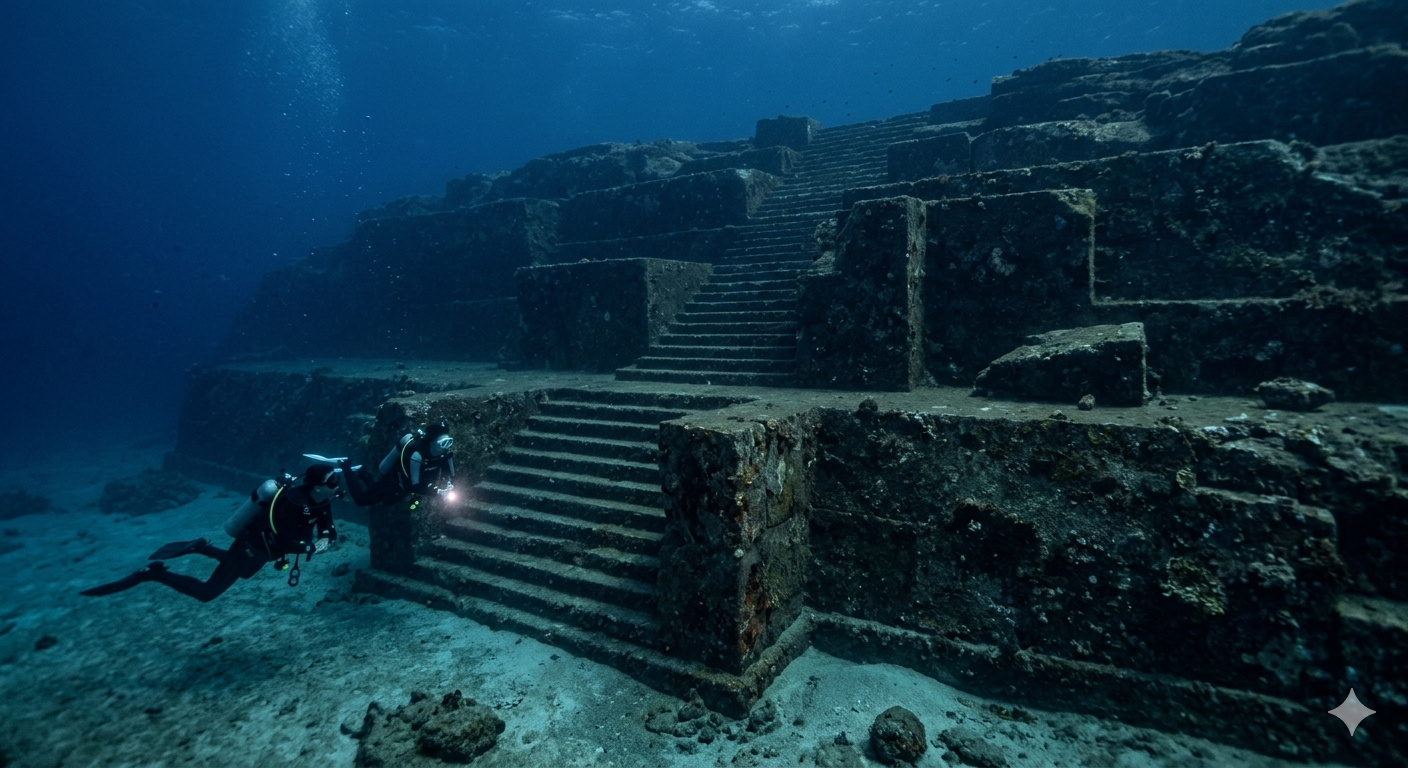
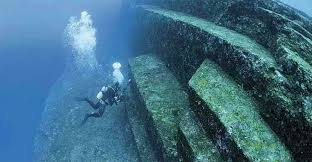
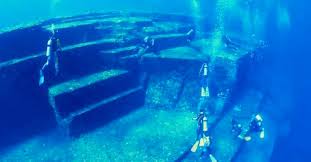
Massive stone terraces.
Perfect right angles.
Steps descending into the deep blue.
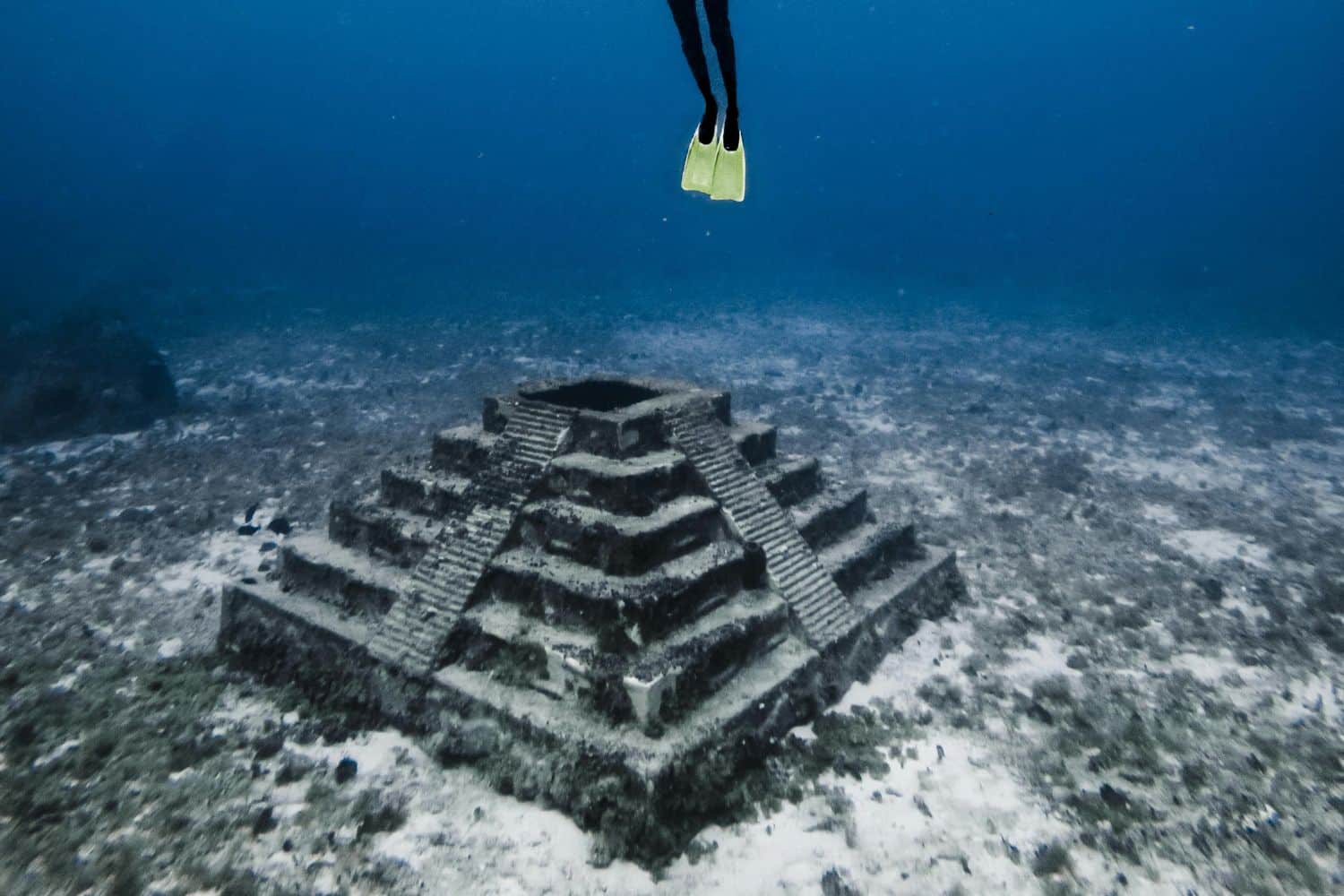
The Yonaguni Monument, as it became known, sits about 25 meters underwater. Some call it a natural rock formation shaped by geological processes. Others see the remains of a lost civilization submerged at the end of the last Ice Age.
But there’s one detail that changes everything…
We’ll get to that in a moment.
Because before we imagine ancient engineers beneath the sea, we need to understand what science actually says about underwater archaeology and the geology of this region.
🔍 What Science Says About Yonaguni
Let’s start with the facts.
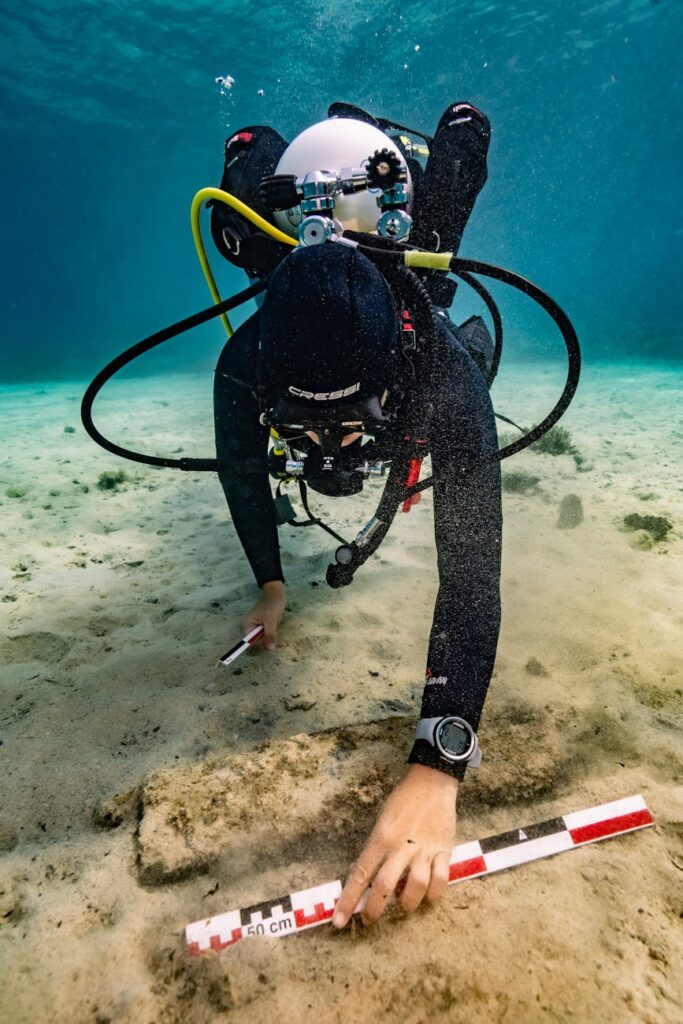
The structure was discovered in 1986 by diver Kihachiro Aratake near the southern tip of Japan’s Ryukyu Islands.
Shortly after, marine geologist Dr. Masaaki Kimura from the University of the Ryukyus began studying it. Over decades, he mapped the formation, measured angles, and analyzed its composition.
Here’s what is verifiable:
- The monument is carved from sandstone and mudstone
- It measures roughly 150 meters long and 40 meters wide
- It features flat surfaces, terraces, and sharp angles
- It lies in a seismically active zone
Now, here’s the scientific consensus.
Most geologists argue that the structure is natural.
Why?
Because sandstone in this region fractures along straight planes. Tectonic stress can create clean, angular breaks. Over time, erosion by currents enhances these geometric shapes.
The Smithsonian Institution and several Japanese geological surveys lean toward a natural explanation.
There is currently no confirmed archaeological evidence (tools, inscriptions, artifacts) proving human construction.
That’s important.
There is also no evidence of a global cover-up, no suppressed discovery, and no validated extraordinary claim. The prevailing scientific interpretation remains geological.
And yet…
Why does it look so engineered?
That question opens the next door.
This reminds me of the debate around Göbekli Tepe, where initial skepticism slowly gave way to a deeper reassessment of ancient capabilities.
🕰️ The Ice Age Context: Could It Have Been Above Water?
Here’s where things get interesting.
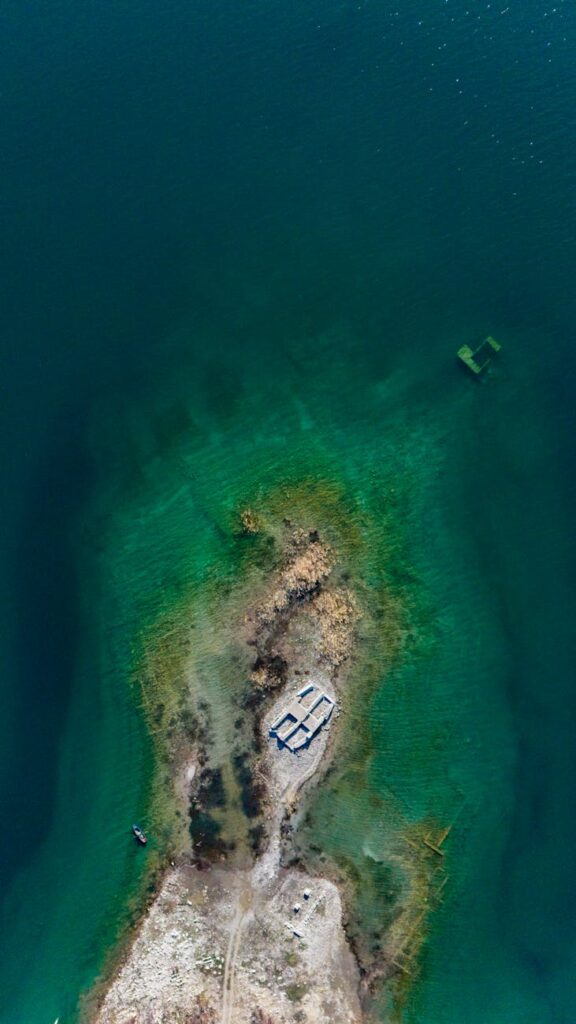
During the Last Glacial Maximum (about 20,000 years ago), sea levels were approximately 120 meters lower than today.
That’s not speculation.
That’s supported by data from NOAA and paleoclimate research worldwide.
If sea levels were dramatically lower, areas currently underwater would have been dry land.
Yonaguni’s monument sits about 25 meters below today’s sea level.
So yes — theoretically — it could have been above water thousands of years ago.
But here’s the catch.
If it were built by humans before submersion, it would need to be:
- Older than 10,000 years
- Built by a culture with advanced stone-working ability
- Preserved without clear tool marks
And as of today, no definitive artifacts have been found at the site confirming human activity.
Still… the geometry is unsettling.
Straight staircases.
Platforms aligned like plazas.
What looks like a “road” leading to a higher terrace.
Natural?
Possibly.
But my mind keeps poking the edges.
What if nature did 80% of the work… and humans modified the rest?
We don’t have proof of that.
But it’s a fascinating possibility.
🧠 Underwater Archaeology: What We Know for Sure
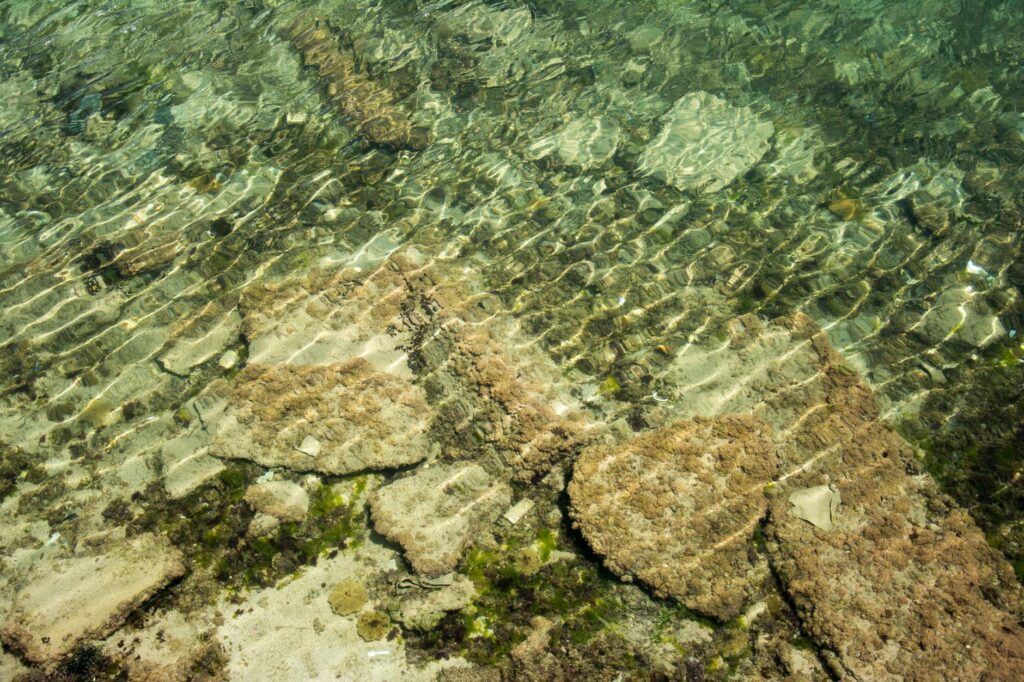
Underwater archaeology is not fringe science. It’s rigorous and well established.
Organizations like:
- UNESCO’s Underwater Cultural Heritage division
- The Nautical Archaeology Program at Texas A&M University
- The National Geographic Society
have documented countless submerged cities and shipwrecks worldwide.
We know sea-level rise after the Ice Age submerged:
- Ancient coastlines
- Settlements
- River valleys
For example:
- The submerged city of Pavlopetri in Greece (5,000 years old)
- The Gulf of Khambhat structures in India (debated but studied extensively)
So the concept of ancient coastal settlements now underwater is not radical.
It’s expected.
But here’s the nuance:
Those confirmed sites contain artifacts — pottery, tools, human remains.
Yonaguni does not.
At least, not yet.
And that absence matters.
🌍 What Yonaguni Means Today
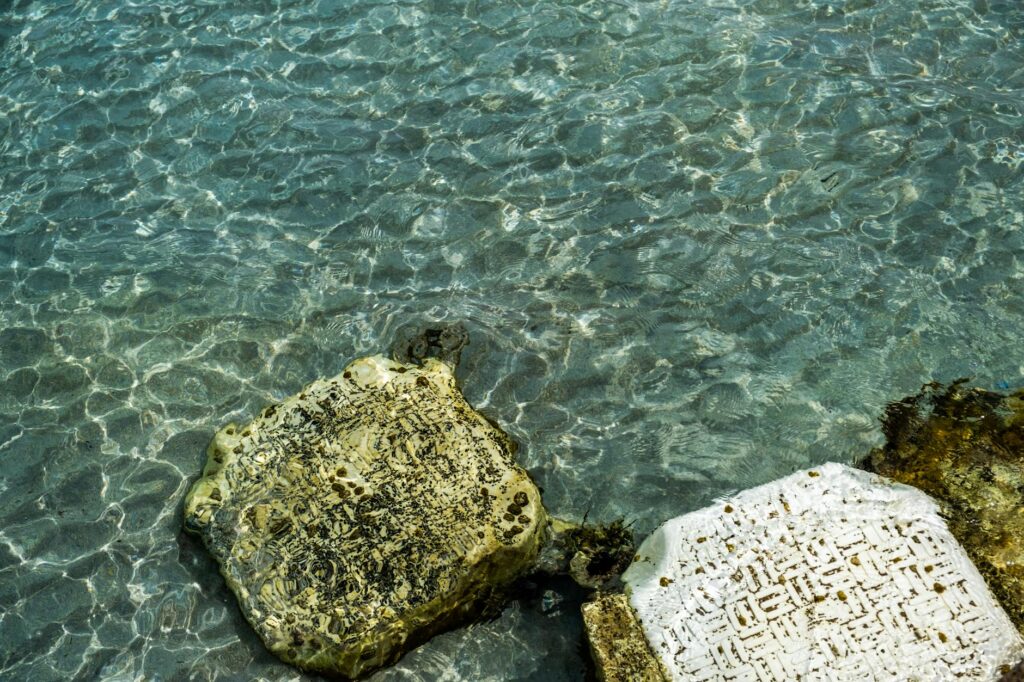
Here’s where this stops being just a rock formation.
If Yonaguni were proven artificial and dated to pre-10,000 BCE, it would challenge current timelines of civilization development.
The dominant archaeological consensus states:
- Agriculture began around 10,000 BCE
- Large-scale monument construction emerged thousands of years later
- Urban civilizations developed even later
A confirmed Ice Age monument would force a reassessment of early human capability.
Not erase history.
But refine it.
That’s how science works.
Incremental correction.
Never revolution without evidence.
And let’s be clear:
There is no current evidence that Yonaguni rewrites human history.
The geological explanation remains the most accepted.
But unanswered questions linger.
And unanswered questions are oxygen for curiosity.
🎭 Multiple Perspectives: Geologists vs. Alternative Theorists
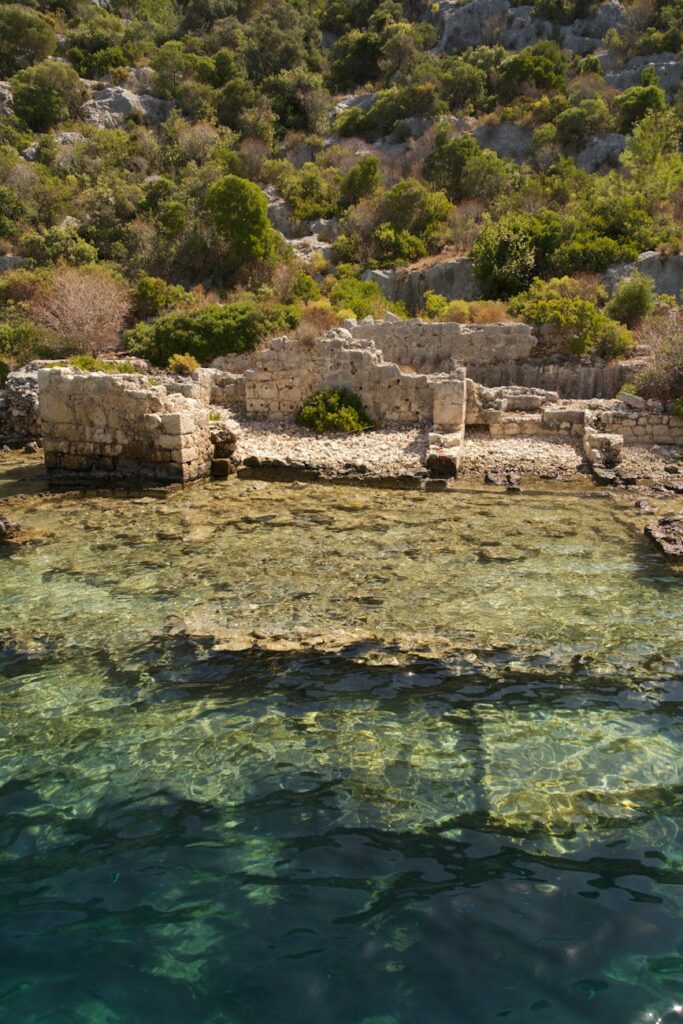
Let’s separate perspectives calmly.
🔹 Geologists say:
- Natural jointing explains straight edges
- Tectonic activity fractures sandstone cleanly
- Ocean currents accentuate geometric appearance
🔹 Some independent researchers suggest:
- Stair-like formations are too precise
- Symmetry suggests design
- Certain features resemble carved pillars
In my reading, this feels less like a clash of truth versus deception…
And more like a tension between pattern recognition and geological probability.
Humans are wired to see structure.
Sometimes we see faces in clouds.
Sometimes we see temples in stone.
That doesn’t mean we’re wrong.
But it does mean we need evidence beyond visual symmetry.
There is no verified proof of advanced lost civilizations at Yonaguni.
The consensus remains natural formation.
Still… I can’t ignore how it feels when you look at the footage.
It’s like staring at a staircase descending into prehistory.
And that image stays with you.
🔥 The Detail That Changes Everything
Remember the detail I mentioned in the beginning?
Here it is.
Even if Yonaguni is 100% natural…
It still tells us something profound.
It tells us that nature can create structures so geometric that they mimic architecture.
And that has implications.
Because it means:
- Our assumptions about what “looks artificial” may be flawed
- Archaeology must rely on context, not intuition
- The ocean likely hides many surprises we haven’t studied yet
The real mystery might not be a lost civilization.
It might be how little of our planet we’ve actually explored.
Over 80% of the ocean floor remains unmapped in high resolution, according to NOAA.
So maybe the question isn’t:
“Did Yonaguni rewrite history?”
Maybe it’s:
“What else is down there?”
And that… is the stronger loop.
🌊 My Personal Take (Without Escaping the Evidence)
In my view, Yonaguni sits in a fascinating gray zone.
Not proven artificial.
Not entirely visually mundane.
It represents the edge of knowledge.
Science has not validated extraordinary claims about it.
There is no evidence of suppressed findings.
But there is space for continued research.
And I respect that.
Curiosity without paranoia.
Skepticism without dismissal.
That balance matters.
🌎 Why This Matters in the Modern World
Today, technology like:
- High-resolution sonar
- AI-assisted seabed mapping
- Autonomous underwater drones
is transforming underwater archaeology.
The same technological acceleration shaping the future of work and artificial intelligence (like we explored in this analysis on innovation and intelligence) is also unlocking ancient mysteries.
The ocean may become the next frontier of archaeology.
Not Mars.
Not the Moon.
But the depths beneath us.
And that’s strangely poetic.
We’re searching for the future in space…
While the past waits underwater.
🌊 Open Conclusion
So…
Is Yonaguni a natural geological wonder?
Probably.
Is it a confirmed lost city?
No evidence supports that.
Could future discoveries reshape what we think we know?
Absolutely.
And here’s the final loop:
What if the real rewrite of history won’t come from Yonaguni itself…
But from the technologies that allow us to see what we’ve never seen before?
The ocean hasn’t told its full story yet.
And I suspect we’ve only read the first page.
👁️ Say “PROSSIGA” if you want to explore what underwater lidar and AI mapping are already revealing.
❓ FAQ
1️⃣ Is the Yonaguni Monument proven to be man-made?
No. The scientific consensus currently supports a natural geological formation. There is no confirmed archaeological evidence proving human construction.
2️⃣ Could it have been above water in the past?
Yes. During the last Ice Age, sea levels were significantly lower. The area where Yonaguni lies could have been exposed land over 10,000 years ago.
3️⃣ Would it rewrite history if proven artificial?
It would significantly impact timelines of early monument construction, but only if supported by solid archaeological evidence — which does not currently exist.
🧠 The world is older than we think.
But it’s also more explainable than we imagine.
The mystery of Yonaguni lives in that tension.
And honestly?
That’s what makes it unforgettable.