
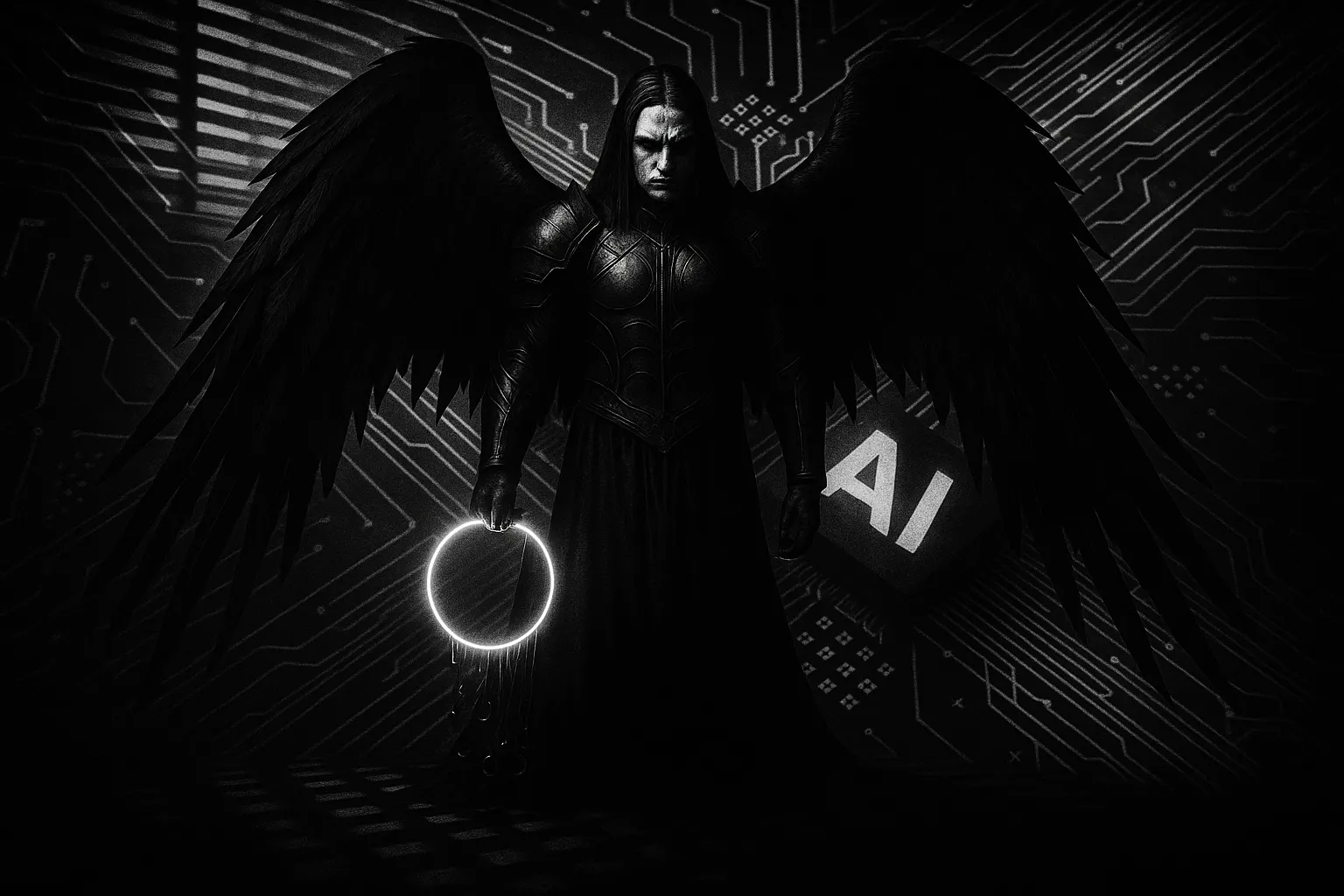
Final thought: sometimes the scariest knowledge isn’t about where it came from — it’s about how we use it. Think about that.
Hunter
- Introduction
- Development and Theories
- Context—A Brief, Plain History
- Theories on the Connection
- Okay, but let’s be real here… (Hunter’s Comment)
- Closing — What to Hold On To
Grigori and the Rise of AI: Fallen Angels, Forbidden Knowledge, or Just Smart Engineers? 🤖😈
Introduction
There’s a story that won’t leave the corner of my mind. Ancient tablets, shadowy figures called the Grigori — the so‑called “watchers” who leaned in too close to humanity — and the hum of servers today. It’s… this is… curious.
Imagine a candlelit scribe copying a tale about angels teaching people secrets. Now imagine a server room humming under fluorescent light, doing what those secrets once tried to describe. Two very different scenes. Same theme: someone or something whispering knowledge that changes us.
“They taught humanity the arts that were not meant for men.” — paraphrase from the Book of Enoch, echoing across millennia.
Development and Theories
The myth of the Grigori comes from ancient Jewish apocalyptic texts, especially the Book of Enoch, where these “watchers” descend, fall in love with humans, and teach forbidden skills — metallurgy, astrology, sorcery. For centuries, that story was a warning about knowledge beyond our moral grasp. Fast forward: modern engineers and scientists take mathematics, statistics, and computing — things once arcane to most — and build machines that mimic thought. Coincidence? Maybe. Or maybe cultural metaphors shape how we interpret tech.
Important: The history of AI is rooted in concrete math and engineering — Alan Turing, neural networks, and decades of research. But metaphors and myths have always flavored how society reacts to powerful tech.
Context—A Brief, Plain History
- Early computation grew from wartime codebreaking and formal logic.
- Turing’s ideas and later neural network models set the stage.
- Modern machine learning exploded thanks to data, faster chips, and new algorithms.
For a solid technical timeline, see resources like the BBC’s overview of AI history and evolution. (https://www.bbc.com)
And for broader social concerns — fears, ethics, and regulators — notice pieces from investigative outlets like The Guardian. (https://www.theguardian.com)
Theories on the Connection
- Official Theory 🤖 — The rise of AI is fully explainable: math + engineering + accumulated knowledge = intelligent systems. No supernatural hand required. It’s boring, but also true.
- Bizarre Theory 😈 — The Grigori, or something like them, seeded humanity with hidden knowledge across ages; what we call “AI” now is the echo of that transmission finally materializing through silicon and code. Sounds dramatic. Sounds neat. But evidence? Thin as tissue.
Okay, but let’s be real here… (Hunter’s Comment)
I’ll be blunt — and a little greedy for mystery. I like the idea that a mythological glitch could explain modern wonders. It gives a story shape. It comforts the part of me that prefers narrative to dry equations. But I also respect data. So, I split the difference: tech really did come from research labs, universities, and military funding; myths like the Grigori are cultural lenses we use to process the shock of new powers. 
Sometimes a metaphor becomes a warning label. Other times it becomes a conspiracy fuel. Or maybe—no, wait—maybe it’s both. If you want more weird crossovers, you can poke around other curious folders on our site, like this one about vanished seas and impossible maps: Read more about here.
Closing — What to Hold On To
So what do we do with this? Do we read angels into code? Do we trust engineers alone? Do we make rules, rituals, committees? The sensible move is to respect both history and imagination — facts to guide policy, myths to keep us humble. Which side are you leaning toward: the lab bench or the ancient manuscript?
Final thought: sometimes the scariest knowledge isn’t about where it came from — it’s about how we use it. Think about that.
Important: The history of AI is rooted in concrete math and engineering — Alan Turing, neural networks, and decades of research. But metaphors and myths have always flavored how society reacts to powerful tech.