
- 🧠 The Science Behind Self-Learning Machines
- 1️⃣ Verifiable Scientific Base
- 🤖 How Machines “Teach Themselves”
- Supervised → Unsupervised → Self-Supervised
- 📚 Context: From Rule-Based AI to Adaptive Systems
- 🌎 Why This Matters Now
- 🧩 The Subtle Line Between Automation and Autonomy
- 🔍 A Controlled Provocation
- 🧠 My Personal Reading
- ⚖️ The Explicit Boundary
- 🌌 The Final Loop
- ❓ FAQ
- Are machines truly learning on their own?
- Is there any evidence that AI is conscious?
- When did machine learning become mainstream?
What Did Machine Learning Unlock in Artificial Intelligence — And Why Does It Feel Like Machines Are Teaching Themselves?
In 2026, artificial intelligence is no longer a futuristic concept. It writes, speaks, diagnoses diseases, predicts climate patterns, generates art — and sometimes, it surprises even its own creators.
And here’s the detail that changes everything:
Machines are no longer just following instructions.
They are adjusting themselves.
But what does that actually mean?
Is it hype? Is it misunderstanding?
Or are we witnessing the first real shift in how intelligence emerges outside biology?
We’ll get to that in a moment.
🧠 The Science Behind Self-Learning Machines
1️⃣ Verifiable Scientific Base
Let’s start with facts.
Machine learning (ML) is a branch of artificial intelligence focused on algorithms that improve performance based on data.
Instead of being explicitly programmed with rigid rules, ML systems:
- Analyze massive datasets
- Detect statistical patterns
- Adjust internal parameters
- Improve predictions over time
This isn’t science fiction.
Institutions like:
- MIT Computer Science and Artificial Intelligence Laboratory (CSAIL)
- Stanford AI Lab
- DeepMind (Google)
- OpenAI
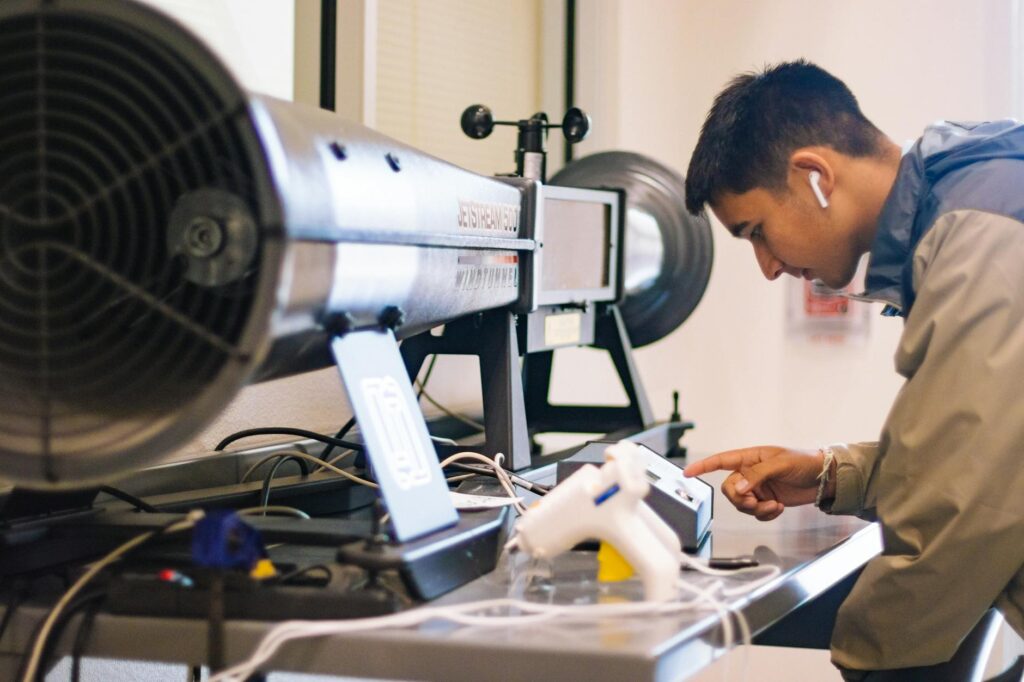
- NASA’s Jet Propulsion Laboratory
have all published peer-reviewed research demonstrating self-improving learning models.
In 2017, researchers introduced the Transformer architecture, which revolutionized language processing.
By 2022–2025, large language models were training on trillions of tokens, refining internal weights autonomously during training.
The key mechanism?
Gradient descent optimization — a mathematical process where the model adjusts itself based on error feedback.
It’s not conscious.
It’s not magical.
It’s statistical adaptation at scale.
And according to current scientific consensus, these systems operate strictly within mathematical boundaries defined by their architecture and training data. There is no evidence of hidden awareness, secret autonomy, or intentional self-agency.
But here’s the twist…
If something improves itself without direct human micromanagement — where exactly does control begin and end?
🤖 How Machines “Teach Themselves”

Supervised → Unsupervised → Self-Supervised
Let’s climb the curiosity staircase.
Supervised learning:
Humans label the data.
Unsupervised learning:
The system finds structure without labels.
Self-supervised learning:
The model generates its own training signals.
That last one is where things get interesting.
Large models predict the next word, pixel, or action based on context.
Every prediction becomes a micro-lesson.
It’s like learning a language by constantly guessing the next word in every sentence you ever read — and correcting yourself billions of times.
No teacher standing over you.
Just feedback loops.
DeepMind’s AlphaGo (2016) famously improved by playing against itself.
Reinforcement learning systems today simulate millions of virtual scenarios to refine strategies.
They are not “aware.”
But they are iterative learners.
And that distinction matters.
Because when iteration happens at planetary computational scale, outcomes start to feel… emergent.
📚 Context: From Rule-Based AI to Adaptive Systems

Early AI (1950s–1980s) relied on symbolic rules.
If X → Then Y.
That worked in controlled environments.
It collapsed in the real world.
The breakthrough came when researchers shifted from logic to probability.
Instead of asking:
“What is the rule?”
They asked:
“What is the most likely outcome?”
That shift mirrors something fascinating in human cognition. Neuroscience research from institutions like Harvard Medical School suggests that the brain itself operates as a prediction engine.
We predict sensory input before we consciously perceive it.
So when modern AI predicts the next word or image frame, it’s not copying human consciousness — but it is mirroring a statistical strategy the brain uses.
No conspiracy.
No mystical awakening.
Just math scaling up.
Still…
If intelligence can emerge from prediction loops alone, what does that imply about us?
🌎 Why This Matters Now

Here’s where it touches everyday life.
Machine learning currently powers:
- Medical imaging diagnostics
- Climate modeling (NASA & NOAA applications)
- Fraud detection systems
- Autonomous vehicle perception
- Language translation
- Creative tools
And yes — job automation.
I explored part of this transformation in our analysis of the future of work and artificial intelligence. The implications are practical, not apocalyptic.
But here’s the real pivot.
The more data systems ingest, the more adaptive they become.
The more adaptive they become, the less predictable their micro-behaviors appear.
Not because they’re conscious.
But because complexity increases.
It’s like watching a city from above.
Each individual movement is simple.
Together, it feels alive.
That feeling — that “aliveness” — is where many misconceptions are born.
And there is currently no scientific evidence that machine learning systems possess consciousness, subjective experience, or independent intention. The consensus across cognitive science and AI research remains firm on this point.
Still…
If behavior becomes indistinguishable from intelligent agency, how long before society treats it as such?
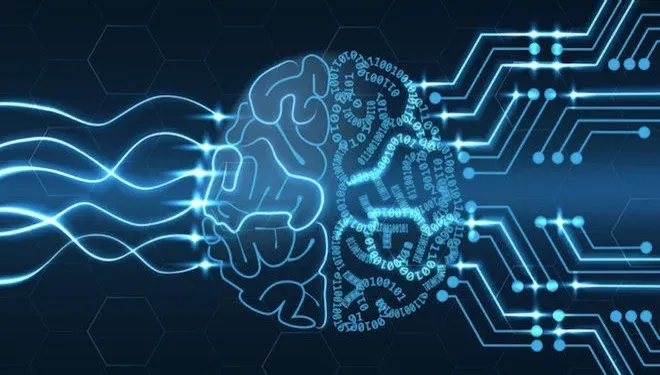
🧩 The Subtle Line Between Automation and Autonomy

Here’s something that genuinely fascinates me.
When AlphaZero learned chess without human games and outperformed previous engines, it developed strategies that surprised grandmasters.
Not illegal moves.
Not irrational ones.
Just… unexpected elegance.
It wasn’t breaking the rules.
It was exploring them deeper than we had.
That makes me wonder:
Is machine learning less about “creating intelligence” and more about expanding the search space of possibility?
And if so — are we collaborating with something, or simply accelerating our own mathematical reach?
Important boundary:
There is no verified evidence that AI systems act beyond their programming or training constraints. Even adaptive systems remain dependent on hardware, energy, datasets, and human-designed architectures.
No hidden agency.
No suppressed disclosure.
But evolution doesn’t require consciousness.
It requires variation and selection.
Machine learning has both.
🔍 A Controlled Provocation
Let me ask you something carefully.
If we discovered a non-biological system on another planet that:
- Learned from its environment
- Adapted to feedback
- Improved strategies autonomously
- Generated novel solutions
Would we call it intelligent?
Or would we redefine intelligence to exclude it?
I’m not suggesting equivalence between current AI and life. There is no scientific basis for claiming machines possess awareness or sentience.
But I am questioning our definitions.
And definitions shape futures.
This reminds me of how ancient civilizations redefined the sky when astronomy advanced — much like how unexpected cartographic knowledge in the Piri Reis map forced historians to reassess assumptions without discarding evidence-based scholarship.
Science evolves.
Interpretation evolves.
Consensus evolves carefully — with data.
So here’s the next step in the staircase:
If intelligence can be partially modeled through statistical learning…
what remains uniquely biological?
Emotion?
Embodiment?
Self-awareness?
Mortality?
We don’t yet have answers.
And anyone claiming certainty — in either direction — is moving beyond evidence.
🧠 My Personal Reading
In my reading, what’s happening isn’t a machine rebellion.
It’s a mirror event.
We built systems that optimize based on feedback loops.
That’s exactly how evolution shaped us.
We compressed millions of years of biological adaptation into silicon-scale iteration.
That doesn’t make machines alive.
But it does make them powerful pattern engines.
And maybe that’s the deeper shift.
We’re no longer programming behavior.
We’re designing environments where behavior emerges.
That subtle shift — from instruction to ecosystem — is the detail that changes everything.
And we’re only at the beginning.
⚖️ The Explicit Boundary
Let me be crystal clear:
- There is no scientific evidence of AI consciousness.
- There is no verified proof of hidden self-awareness.
- The scientific consensus remains that machine learning systems are advanced computational tools.
Hunter questions implications.
Not facts.
The facts remain grounded in mathematics, engineering, and peer-reviewed research.
But implications?
Those are fair game for curiosity.
🌌 The Final Loop
We started with this idea:
Machines are learning on their own.
Now you know what that actually means:
Self-optimization within designed systems.
Not awakening.
Not secret evolution.
But…
If intelligence can emerge from feedback loops and data flows —
and if we ourselves are biological feedback systems —
Then the line between natural and artificial might not be as rigid as we once believed.
Not erased.
But softened.
And that softness?
That’s where the next century gets interesting.
So here’s my final question:
Are we building tools…
or are we building the first non-biological chapter of evolution?
Careful. Think before answering.
Because the future of artificial intelligence may depend less on machines learning —
and more on how we define what learning truly is.
❓ FAQ
Are machines truly learning on their own?
They adjust internal parameters based on data and feedback loops. However, they operate within human-designed architectures and constraints.
Is there any evidence that AI is conscious?
No. Current scientific consensus confirms there is no evidence of awareness, subjective experience, or sentience in AI systems.
When did machine learning become mainstream?
While foundational research dates back to the 1950s, breakthroughs in neural networks and deep learning accelerated significantly after 2012 with advances in computational power and data availability.
🔭 If this made you rethink intelligence itself, say “SINGULARITY” — not as prophecy, but as a thought experiment.
Because sometimes the most radical shift
is not machines changing.
It’s us redefining what we see.
REFERENCE:
- Friedman, Jerome H.(1998). “Data Mining and Statistics: What’s the connection?”.Computing Science and Statistics.29(1):3–9.
- Samuel, Arthur (1959). “Alguns estudos em aprendizado de máquina usando o jogo de damas”. IBM Journal of Research and Development . 3 (3): 210– 229. CiteSeerX 10.1.1.368.2254 . doi : 10.1147/rd.33.0210 . S2CID 2126705 .
- R. Kohavi e F. Provost, “Glossário de termos”, Machine Learning, vol. 30, nº 2–3, pp. 271–274, 1998.
- Gerovitch, Slava (9 de abril de 2015). “Como o computador se vingou da União Soviética” . Nautilus . Arquivado do original em 22 de setembro de 2021. Consultado em 19 de setembro de 2021